
Anthropic mathematician and researcher Levent Alpöge has published a statement claiming that he and Claude have discovered a proof of the Riemann Hypothesis, one of the most famous unsolved problems in mathematics. The proposed proof, which Alpöge states extends to the Generalized Riemann Hypothesis, was released as a four-page summary note accompanied by an extensive formal code archive written in the Lean 4 proof assistant. The claim remains unverified by independent mathematical experts, and Anthropic has not officially endorsed or confirmed the finding.

What the Riemann Hypothesis Is and Why It Matters
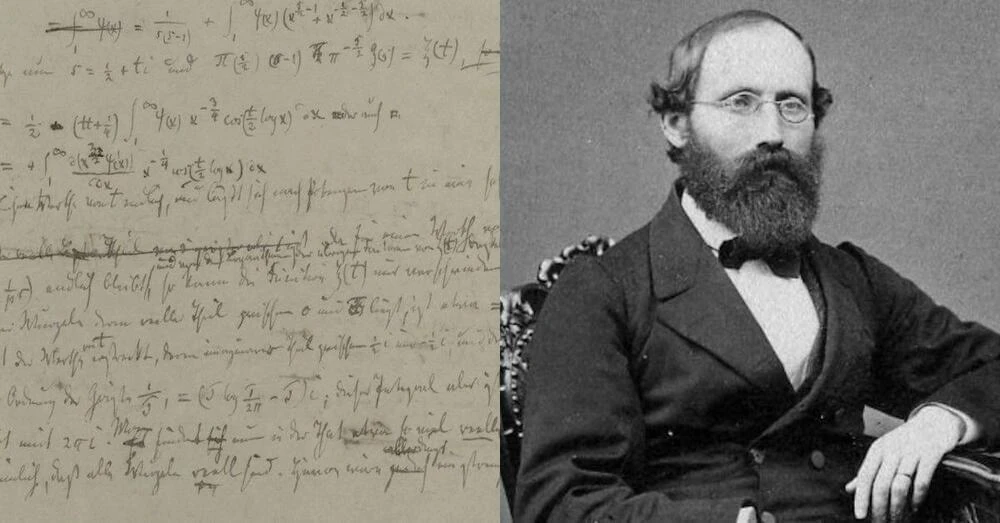
Formulated by German mathematician Bernhard Riemann in his landmark 1859 paper, the Riemann Hypothesis addresses the fundamental distribution of prime numbers. Riemann analyzed the zeta function, which is defined for complex numbers and extended across the complex plane through analytic continuation.
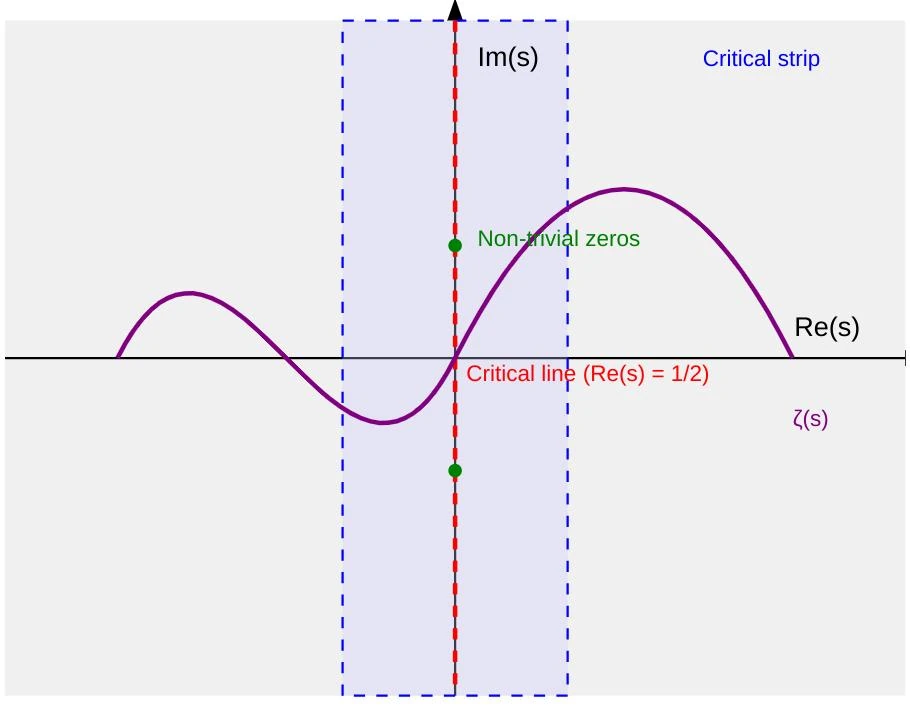
While the zeta function possesses known “trivial” zeros at negative even integers, Riemann conjectured that all “non-trivial” zeros lie strictly on a vertical line in the complex plane: the critical line where the real part equals 1/2. Proving that no non-trivial zeros stray off this line would establish deep bounds on how prime numbers are spaced across the integers.
In 2000, the Clay Mathematics Institute designated the Riemann Hypothesis as one of the seven Millennium Prize Problems, attaching a $1 million bounty for the first verified proof. Hundreds of published theorems across number theory, arithmetic geometry, and cryptographic foundations are conditioned on the hypothesis being true.
Lean 4 Archive and Claimed Formalization
Rather than submitting a standard academic manuscript, Alpöge published a four-page note titled Remark on his personal website, explaining that a full natural-language exposition would span hundreds of thousands of pages. Instead, the author chose to present the argument as an interactive formal proof in Lean 4.
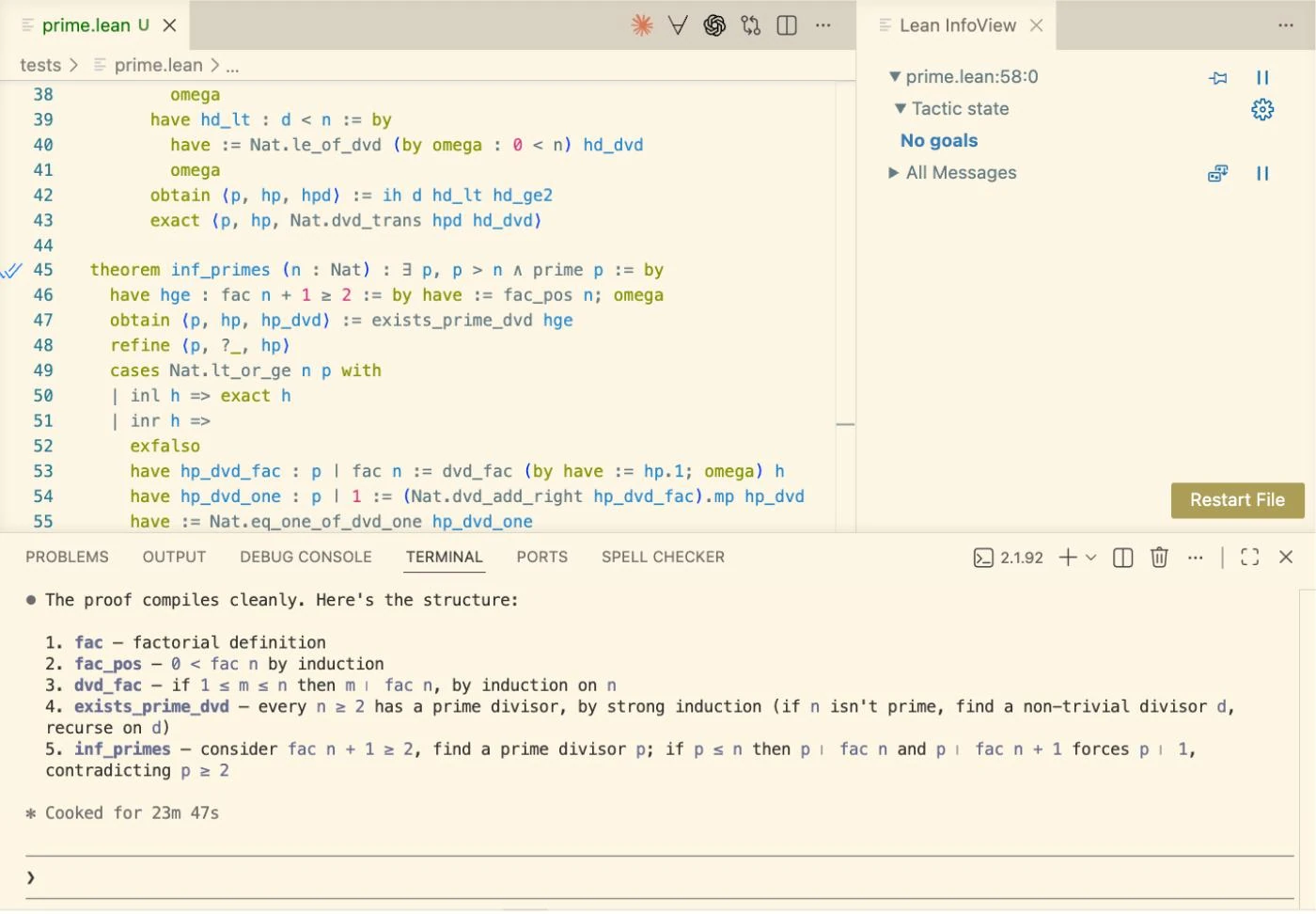
The proof source code was distributed as a compressed archive divided into 14 separate parts, which has also been mirrored on a public GitHub repository. Alpöge claims that the proof was formalized in Lean without auxiliary unproven assumptions or circular axioms. In modern automated reasoning evaluated in our frontier AI coding and reasoning benchmark analysis, Lean provides a machine-checked environment where every deduction step must satisfy the software kernel’s type-checker.
What Is Known and Unknown About the Proposed Method
In his introductory statement, Alpöge described a collaborative division of labor with Claude. He stated that he established the conceptual architecture starting from a simplified toy model, while crediting Claude with assisting on complex technical machinery, specifically referencing automorphic forms for higher-rank groups and theta lifts.
However, crucial mathematical details remain to be scrutinized. Because the release relies almost entirely on automated Lean code rather than an accessible narrative paper, mathematicians must reconstruct the high-level intuition behind the formal definitions. Outside of Alpöge’s brief four-page note and the raw Lean scripts, no detailed secondary explanation of the strategy has been independently validated.
Independent Verification Requirements
The existence of a Lean codebase does not automatically mean the Riemann Hypothesis has been solved. Rigorous verification requires navigating several distinct technical hurdles:
- Code Integrity and Compilation: Verifying that all 14 archive parts unpack cleanly, compile without errors against the designated Lean 4 version, and rely on valid library dependencies.
- Definition Auditing: Ensuring that the formalized definitions of the Riemann zeta function, Dirichlet L-functions, and complex zeros faithfully represent the mathematical objects without subtle bugs, trivializing axioms, or accidental inconsistencies.
- Mathematical Peer Review: Translating the mechanized steps into conceptual human understanding to confirm that the underlying mathematics is sound.
Furthermore, under the rules established by the Clay Mathematics Institute, a proposed solution to a Millennium Prize problem cannot be recognized immediately. The rules require that the complete proof be published in a qualifying, peer-reviewed mathematical journal and withstand at least two years of thorough scrutiny by the international mathematical community before any prize consideration can begin.
Corporate Context and Timing
The announcement surfaced during the same week that Anthropic completed its high-profile public debut on the Nasdaq exchange, examined in our Anthropic Nasdaq IPO listing analysis. While some online observers noted the proximity of the two events, there is no evidence that Anthropic coordinated the release, timed the announcement to influence market sentiment, or used the claim for marketing purposes.
Anthropic has not issued an official corporate endorsement of the proof claim, nor has the company confirmed the result in formal enterprise briefings. The work reflects research conducted within the evolving Anthropic Claude ecosystem infrastructure, where frontier models are increasingly applied to formal theorem proving and scientific problem solving.
Balanced Assessment: A Claim Awaiting Verification
If Levent Alpöge and Claude’s work withstands formal compilation checks and rigorous mathematical peer review, it would represent a historic milestone in both pure number theory and computer-assisted reasoning. The Riemann Hypothesis has stood unbroken for 167 years, defeating generations of the world’s most capable mathematicians.
Until independent mathematicians and Lean maintainers have audited the definitions, completed kernel verification, and confirmed the absence of hidden assumptions, the announcement must be understood as an ambitious proposed proof rather than a closed chapter. The global mathematical community now faces the task of determining whether this massive Lean archive delivers on its extraordinary claim.
Stay Ahead in the Tech World
Join our community for breaking news, exclusive gadgets coverage & direct admin support.