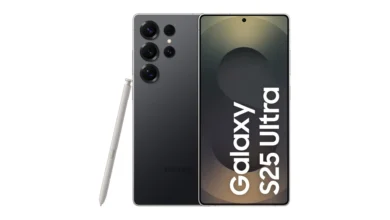
Samsung is preparing its most dramatic exterior design overhaul in four generations for its 2027 flagship lineup. Early dummy units and renders leaked by tipster SMA Sithick reveal the finalized rear chassis and camera architecture for both the Samsung Galaxy S27 Ultra and the newly minted Galaxy S27 Pro. The leak confirms that Samsung is officially retiring the standalone floating camera rings seen across the Galaxy S22 Ultra through S26 series, replacing them with a unified, raised rectangular camera island.
Samsung Galaxy S27 Series Drops Floating Lens Look for Rectangular Camera Island
The leaked hardware renders showcase a clean, flat cream-and-titanium backplate dominated by a large camera plateau positioned in the top-left corner. Rather than drilling individual circular cutouts through the glass, Samsung has grouped the primary camera sensors, laser autofocus hardware, and LED flash into a dedicated elevated module with softly rounded corners and metallic accent rings.
Key Highlights and Camera Upgrades
- Raised Rectangular Camera Island: Samsung consolidates all rear imaging hardware into a distinct elevated slab, moving away from standalone individual lens barrels to improve structural rigidity and make room for magnetic accessory arrays.
- Consolidated Triple-Sensor Array: Leaks point to Samsung trimming the rear configuration to three primary lenses (200MP main, 50MP ultrawide, and a 50MP 5x periscope telephoto), reportedly dropping the dedicated 3x zoom camera in favor of high-resolution sensor cropping.
- Dual-Tier Flagship Synergy: Both the Galaxy S27 Ultra and the Galaxy S27 Pro share this new geometric design language, aligning the premium portfolio alongside early battery and silicon disclosures detailed in recent iPhone 18 vs Galaxy S27 battery and hardware roadmap leaks.
- New Titanium Colorways: The leak highlights a refined natural titanium finish with soft-touch matte glass, with additional dark obsidian and pale pastel colorways planned for launch.
Samsung Galaxy S27 Ultra and S27 Pro: Leaked Specifications Comparison
| Hardware Specification | Galaxy S27 Ultra (Expected) | Galaxy S27 Pro (Expected) |
|---|---|---|
| Rear Camera Layout | Triple-camera rectangular module: 200MP Main (OIS) + 50MP Ultrawide + 50MP Periscope (5x optical zoom) | Triple-camera rectangular module: 200MP Main (OIS) + 50MP Ultrawide + 50MP Telephoto (3x optical zoom) |
| Rear Module Design | Raised rectangular plateau with metallic bezel trim | Raised rectangular plateau with color-matched frame |
| Display | 6.9-inch Dynamic AMOLED 2X, 120Hz LTPO, Flat Glass | 6.7-inch Dynamic AMOLED 2X, 120Hz LTPO, Flat Glass |
| Processor / Silicon | Snapdragon 8 Elite 🏆 Gen 2 for Galaxy (3nm / 2nm GAA) | Snapdragon 8 Elite Gen 2 / Exynos 2700 (regional) |
| Auxiliary Sensors | Laser AF, color temperature sensor, mic cutout | Laser AF, LED flash, mic cutout |
| Operating System | One UI 9.5 based on Android 17 | One UI 9.5 based on Android 17 |
| Expected Launch Window | January / February 2027 (Galaxy Unpacked) | January / February 2027 (Galaxy Unpacked) |
| Expected Price in India | Starting ₹1,29,999 (Base Variant) | Starting ₹1,04,999 (Base Variant) |
Expected Price in India and Launch Timeline
Samsung is expected to unveil the Galaxy S27 series during its annual Galaxy Unpacked keynote in January or February 2027. Early supply chain leaks suggest the flagship Galaxy S27 Ultra will command an expected Price in India starting at ₹1,29,999 for the baseline 12GB + 256GB model, continuing the premium tier pricing seen across earlier generations and tracked in our Samsung Galaxy flagship retail pricing reports. The newly positioned Galaxy S27 Pro is slated to sit directly between the Plus and Ultra tiers, carrying an anticipated Price in India of approximately ₹1,04,999.
PFD Context
Samsung’s pivot from isolated floating camera rings to a unified rectangular island marks a practical engineering recalibration. As periscope optics and primary 200MP sensors grow physically deeper, consolidating them onto a single raised plate allows engineers to shave internal chassis thickness while creating space for larger graphite cooling sheets and tighter MagSafe-style magnetic coil integration. Furthermore, pruning the secondary 3x sensor signals that Samsung plans to rely heavily on next-generation in-sensor 2x and 3x zoom processing within its upcoming Samsung One UI software ecosystem roadmap.
Stay Ahead in the Tech World
Join our community for breaking news, exclusive gadgets coverage & direct admin support.