








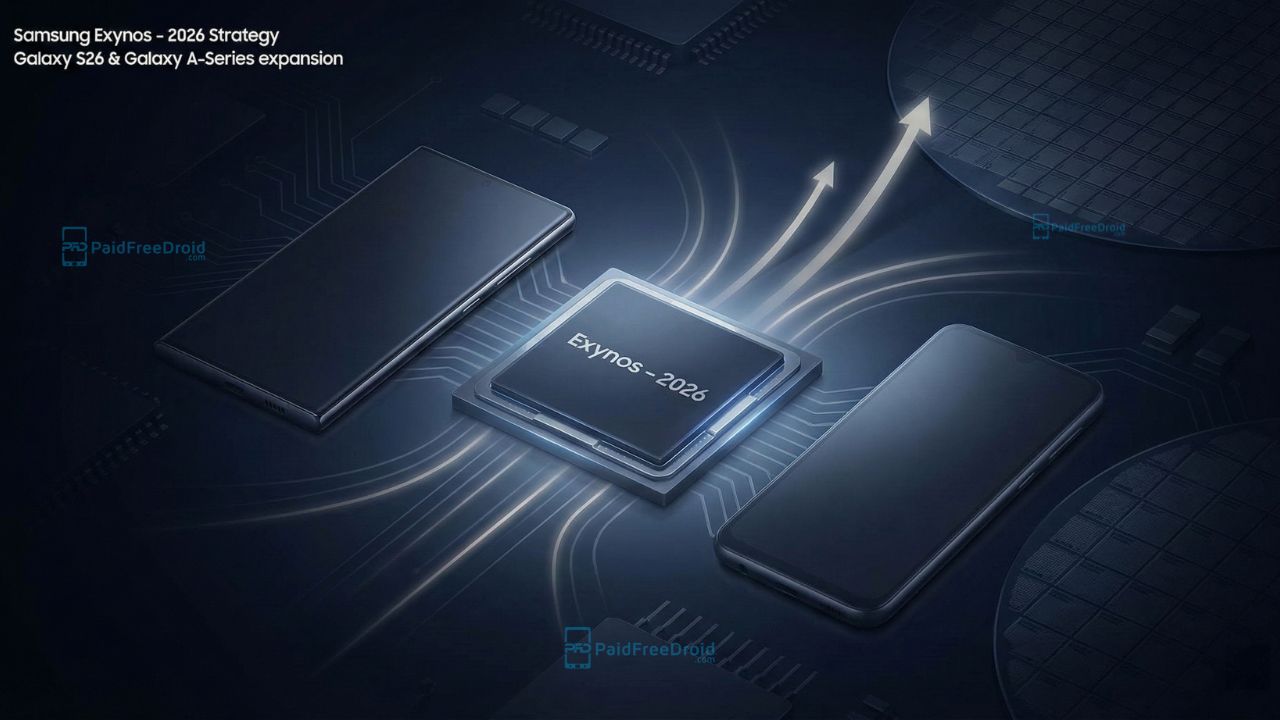
Samsung is reportedly preparing for a radical shift in its semiconductor strategy for 2026, signaling a massive resurgence for its in-house Exynos brand. New reports detailing the processor lineup for the upcoming Galaxy S26 flagships and the high-volume Galaxy A-series suggest that the company is moving away from its heavy reliance on Qualcomm. By integrating Exynos chips into nearly every major device tier, Samsung aims to significantly boost its global market share and reduce component costs.
The Flagship Split: Galaxy S26 & Fold 8
For the past few generations, Samsung’s premium foldables have exclusively used Qualcomm Snapdragon chips globally. However, the 2026 roadmap suggests a historic change.
- Galaxy Z Fold 8 & Z Flip 8: Reports indicate a mixed strategy, likely utilizing Snapdragon 8 Elite 🏆 Gen 5 in key markets (like the US and China) while introducing a high-end Exynos variant (possibly the Exynos 2600) in international regions. This marks the first time the foldable line may not be Snapdragon-exclusive.
- Galaxy S26 Series: The “Dual-Chip” strategy returns. The lineup will feature the Exynos 2600 (built on the 2nm process) in Europe and Asia, while the Snapdragon variant remains for North America.
Mid-Range Dominance: The A-Series Goes All-In
The real driver for the predicted “skyrocketing” Exynos market share lies in the high-volume mid-range segment. Samsung’s best-selling devices are set to drop third-party silicon entirely.
Galaxy A57, A37, and A27
The core of the mid-range lineup will be powered exclusively by Samsung’s own silicon.
- Galaxy A57: Expected to feature the Exynos 1680 (successor to the 1580), bringing near-flagship performance to the sub-₹40,000 segment.
- Galaxy A37 & A27: Both will utilize optimized Exynos chipsets, ensuring tighter software integration with One UI and longer update support.
The Budget Tier: Where MediaTek Fits In
While Exynos takes the spotlight, MediaTek remains a key partner for the entry-level segment.
- Galaxy A17: A split strategy is expected, using Exynos in some regions and MediaTek Dimensity chips in others to manage supply chain logistics.
- Galaxy A07: The ultra-budget model will likely stick to MediaTek (Helio or entry-level Dimensity) to keep costs as low as possible.
2026 Processor Lineup at a Glance
| Device Series | Primary Processor | Secondary Processor (Region Dependent) |
| Galaxy Z Fold 8 / Flip 8 | Snapdragon 8 Elite Gen 5 | Exynos 2600 (Rumored) |
| Galaxy S26 Series | Snapdragon 8 Elite Gen 5 | Exynos 2600 |
| Galaxy A57 | Exynos (Exclusive) | N/A |
| Galaxy A37 | Exynos (Exclusive) | N/A |
| Galaxy A27 | Exynos (Exclusive) | N/A |
| Galaxy A17 | Exynos | MediaTek |
| Galaxy A07 | MediaTek | N/A |
Analysis: Why This Strategy Matters
This aggressive push for Exynos in 2026 serves three critical goals for Samsung:
- Cost Control: With Snapdragon flagship chip prices rising annually, using in-house silicon for the S26 and Fold 8 helps Samsung maintain profit margins without hiking device prices.
- Foundry Maturity: Deploying Exynos chips across the high-volume A-series (A57/A37) provides massive scale for Samsung Foundry, helping to refine their manufacturing nodes.
- Market Share: By replacing MediaTek and Qualcomm in the mid-range, Samsung System LSI (the chip division) is positioned to regain its spot as a top global chipset vendor.

The 2026 roadmap paints a clear picture: Samsung is betting big on itself. By equipping everything from the Galaxy A27 to the Galaxy Z Fold 8 with its own processors, the company is poised to dramatically increase Exynos market share. If the performance of the new 2nm Exynos chips matches the hype, 2026 could be the year Samsung finally steps out of Qualcomm’s shadow.
Tags: Samsung Exynos 2026 strategy, Galaxy S26 processor, Galaxy A57 Exynos, Galaxy Z Fold 8 Exynos, Samsung market share, Snapdragon vs Exynos 2026, Samsung chipset roadmap.
Visit our website daily for latest tech news. Follow Us on Instagram for awesome tech stuff. Also, Join our Telegram Group and connect directly with Admin.


