The Federal Bureau of Investigation is actively responding to an apparent cyberattack targeting one of the United States’ most critical law enforcement computing assets: the National Crime Information Center (NCIC) database. Operated by the FBI’s Criminal Justice Information Services (CJIS) Division, the NCIC functions as the central nationwide repository for real-time criminal justice data, relied upon daily by federal, state, local, and tribal law enforcement officers.
The reported security breach, which surfaced in late November 2026, has prompted high-level inquiries from the Department of Justice, the Cybersecurity and Infrastructure Security Agency (CISA), and congressional intelligence oversight committees. Investigators are racing to determine whether adversaries gained persistent network access, exfiltrated classified surveillance records, or compromised the operational integrity of active warrant databases.
NCIC Database Architecture: What Was Targeted and Why Police Rely on It
Established in 1967 and modernized across multiple computing generations, the NCIC database is the lifeblood of day-to-day American policing. The system indexes over 21 operational categories spanning millions of active records:
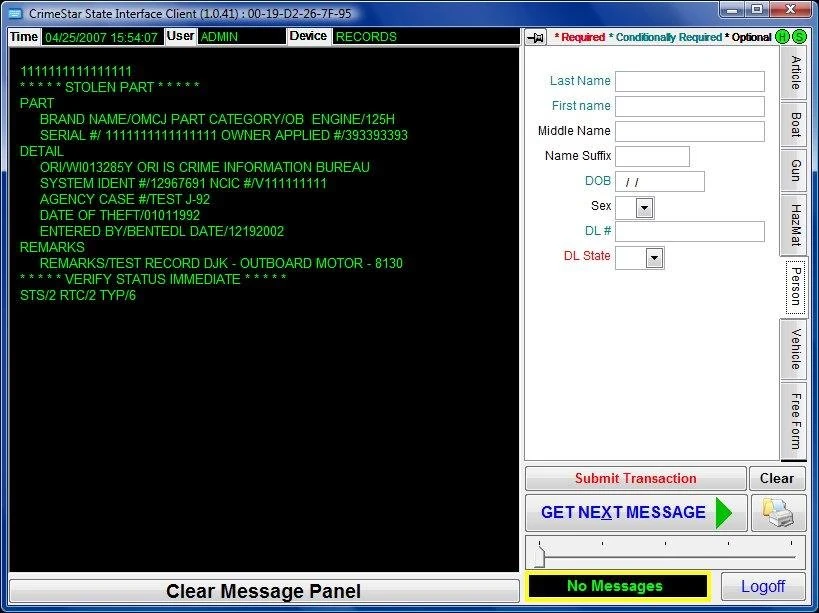
- Person Files: Indexes wanted fugitives, missing persons, suspected terrorists (via the Terrorist Screening Center), foreign fugitives, protection orders, probation/supervised releasees, and convicted sexual offenders.
- Property Files: Tracks stolen firearms, stolen vehicles, identifiable felony contraband, stolen license plates, and counterfeit securities.
- Field Query Velocity: Field officers execute hundreds of thousands of automated NCIC queries daily during standard traffic stops, airport customs screenings, and active tactical deployments.
NCIC Breach Investigation Parameters: Scope and Incident Timeline

| Investigation Parameter | Official Federal Status |
|---|---|
| Target System | FBI Criminal Justice Information Services (CJIS) – NCIC Database |
| Discovery Window | Late November 2026 |
| Lead Investigating Agencies | FBI Cyber Division, CISA, Department of Justice National Security Division |
| Potential Attack Vector | Compromised administrative gateway vs cloud-linked query portal API |
| Current Operational Status | NCIC remains online under heightened inter-agency monitoring |
| Primary Threat Profile | State-sponsored advanced persistent threat (APT) or sophisticated ransomware syndicate |
Data Confidentiality vs. Operational Integrity: The Dual Threat
Cybersecurity analysts and former intelligence officials emphasize that an unauthorized intrusion into the NCIC poses two distinct categories of catastrophic risk:
1. The Confidentiality Risk (Data Exfiltration): If threat actors successfully extracted bulk records from the NCIC, hostile intelligence services or organized crime syndicates could identify active federal surveillance targets, uncover confidential informant tracking markers, or map undercover law enforcement assignments.
2. The Integrity Risk (Data Manipulation): An even more dangerous scenario involves unauthorized data alteration. If hackers modified active records, they could quietly delete active warrants for international cybercriminals, insert fraudulent flags against law-abiding citizens, or corrupt stolen firearm serial logs. During a nighttime traffic stop, an officer relying on corrupted NCIC data could be misdirected with lethal consequences.
These systemic risks mirror broader vulnerabilities across connected mobile networks, previously highlighted in our technical analysis of dangerous mobile applications and digital surveillance vectors.
Recurrent Federal Cyber Intrusions and Government Cloud Security
The NCIC breach represents the latest in a troubling series of digital intrusions targeting United States federal infrastructure. Earlier in autumn 2026, security researchers identified unauthorized activity linked to government cloud computing environments hosted on commercial GovCloud instances.

As federal departments migrate legacy mainframe databases into modern hybrid cloud environments, interface boundaries frequently introduce unforeseen credential vulnerabilities, as evaluated in our coverage of enterprise cloud outages and centralized server resilience.
Inter-Agency Security Directives Issued to Police Departments
While the technical forensic audit continues, the FBI CJIS Division and state fusion centers have issued mandatory operational protocols to regional police agencies:

- Secondary Hit Verification: Field officers must obtain verbal secondary confirmation through dispatch before acting upon high-priority NCIC warrant hits or violent person warnings.
- Credential Invalidation: Immediate credential rotation and hardware security token re-verification across all terminal operators accessing NCIC gateways.
- API Query Rate Limiting: Automated anomaly detection filters have been activated to flag anomalous bulk queries originating from remote law enforcement terminals.
PFD Context: Bridging 1970s Mainframes with Modern Cloud Portals

The NCIC cyberattack exposes the growing friction between decades-old legacy criminal mainframes and modern interconnected federal law enforcement portals. As state-sponsored actors and cyber syndicates deploy increasingly sophisticated automated scraping and exploit frameworks, as chronicled in our report on how secure platforms are restricting automated agent data scraping, the Department of Justice faces mounting pressure to overhaul perimeter defenses before compromised databases translate into field officer casualties.
Stay Ahead in the Tech World
Join our community for breaking news, exclusive gadgets coverage & direct admin support.