The biggest trap in modern artificial intelligence is tutorial purgatory. Thousands of aspiring builders spend months sitting through 14-hour video bootcamps, memorizing linear algebra proofs from 2017, and watching slides about obsolete neural networks without ever sending a prompt to an API or deploying a functional tool. By the time they finish the course, the state of the art has moved on, and they still do not know how to build a working application.
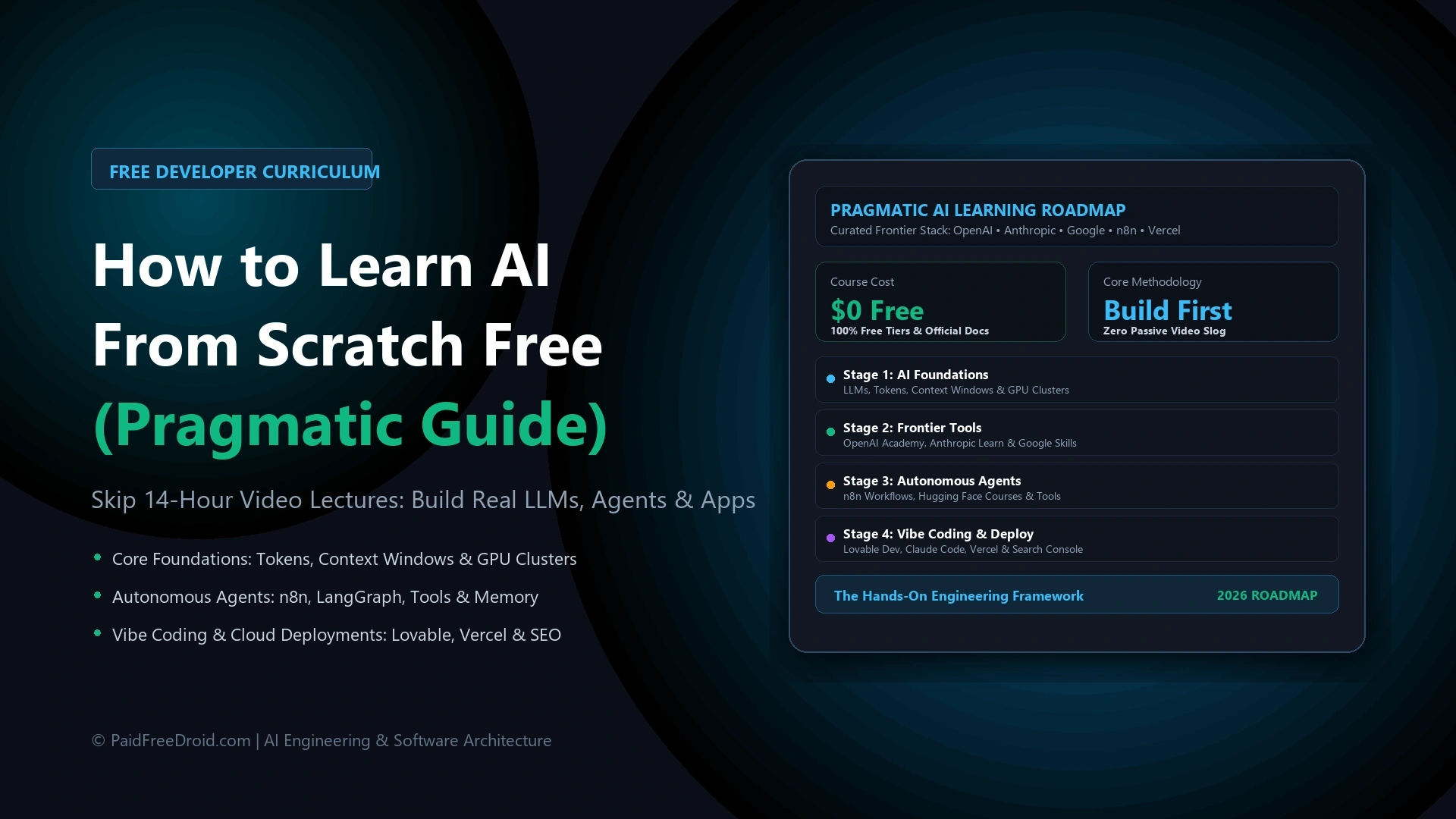
You do not master modern AI by passively watching lectures. You master it by actively using it: dissecting token streams, testing system prompt boundaries, wiring multi-agent loops, and deploying real software. The most effective curriculum in the world is completely free. Frontier labs like OpenAI, Anthropic, and Google publish enterprise-grade documentation, free interactive courses, and hands-on developer tracks. This guide outlines the exact, zero-cost curriculum to take you from foundational compute concepts to building and deploying autonomous AI agents.
Why Watching 14-Hour AI Lectures Won’t Make You a Builder
Traditional computer science education treats artificial intelligence as an abstract mathematical theory. While understanding calculus and gradient descent matters if you are designing transformer architectures from scratch at a research lab, modern AI engineering requires an entirely different skill set. Developers today succeed through rapid prototyping, context window optimization, tool routing, and orchestration.
Frontier models like Claude 3.7 Sonnet, GPT-4o, and Gemini 2.5 Flash are evolving every few months. A pre-recorded video recorded six months ago cannot teach you how to write modern agentic system instructions, configure Model Context Protocol (MCP) servers, or leverage context caching. By immersing yourself directly in frontier model chats, testing live API parameters, and reading first-party technical documentation, you learn the actual failure modes and reasoning strengths of modern models in real time. Comparing your setup against the top ranked AI developer tools gives you a benchmark of what production stacks actually look like today.
Phase 1: Master Tokens, LLM Mechanics, and GPU Compute
Before writing code or assembling agents, you need an intuitive mental model of how large language models generate text and where compute bottlenecks occur. You must understand that language models do not read words: they process sub-word tokens representing mathematical vectors in multi-dimensional space.
To ground yourself in the essential terminology, start with Andrew Ng’s renowned free introductory course: Coursera AI for Everyone. When registering, select the Audit option to access the entire lecture catalog, quizzes, and learning materials completely free of charge without purchasing a certificate.
Focus specifically on understanding these foundational concepts during Phase 1:
- Tokens and Context Windows: How text maps to integers, why punctuation consumes tokens, and how expanding context windows (from 8K tokens up to 2M tokens) impact latency and reasoning quality.
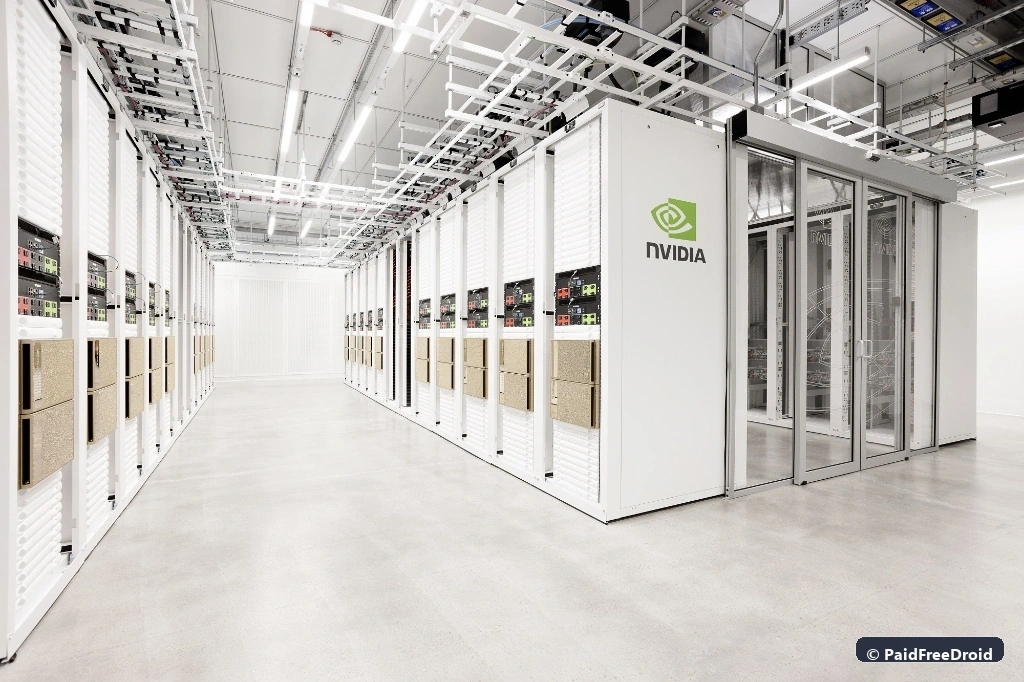
- Inference vs Training Compute: The difference between multi-million-dollar pre-training clusters running on NVIDIA H100 and B200 HGX systems versus real-time token inference at the edge.
- Sampling Parameters: How temperature, top-p, and frequency penalties alter next-token probability distributions, shifting outputs between deterministic code generation and creative exploration.
Phase 2: Master Frontier Lab APIs and Enterprise Tooling
Once you understand tokens and inference, step away from basic consumer chat interfaces and learn how frontier AI models are commanded programmatically. First-party documentation from the labs building these models is vastly superior to third-party tutorials because it updates alongside new model releases.
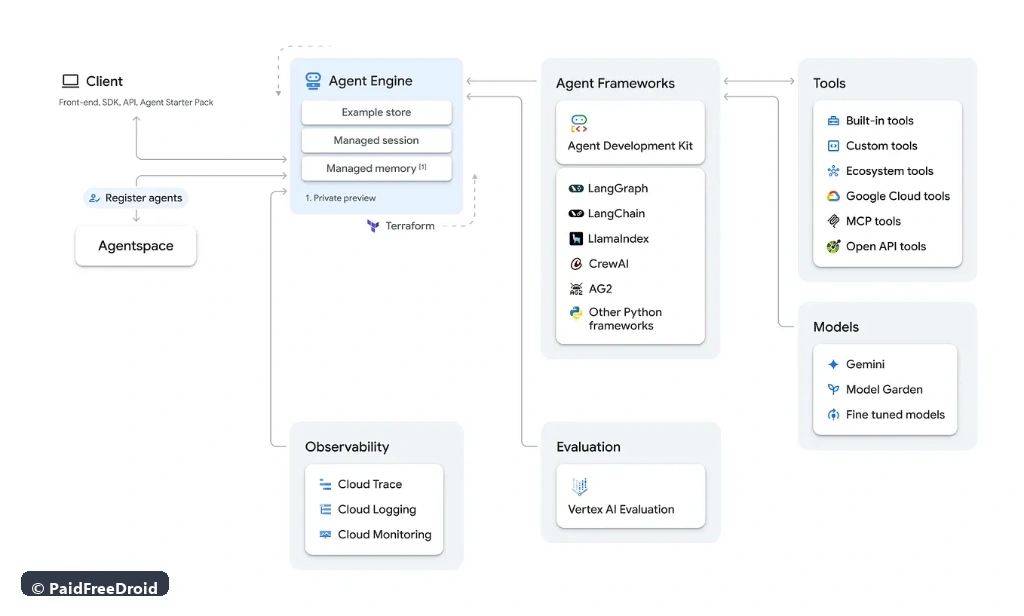
Work through these three completely free official training hubs:
- OpenAI Academy: Visit academy.openai.com to master structured outputs, JSON schema enforcement, prompt engineering best practices, and the Assistants API.
- Anthropic Interactive Courses: Visit anthropic.com/learn to study Anthropic’s interactive prompt engineering interactive tutorials, XML tag structuring, multi-shot conditioning, and Model Context Protocol (MCP) implementations.
- Google Cloud Skills Boost: Work through the official Google Cloud Generative AI Learning Path. This 10-module free track demystifies foundation model tuning, Vertex AI model gardens, and responsible AI governance.
As you complete these tracks, experiment directly inside lab developer consoles. Test how system prompts drastically steer model behavior, compare token processing latencies, and explore how enterprise platforms deploy cloud hosted AI agent platforms without requiring local GPU hardware.
Phase 3: Build Autonomous AI Agents and RAG Pipelines
A single prompt-and-response call is no longer the ceiling of modern artificial intelligence. The frontier of development has shifted to autonomous agents: systems that maintain long-term memory, evaluate their own intermediate steps, call external APIs, and execute multi-step workflows until a high-level goal is achieved.
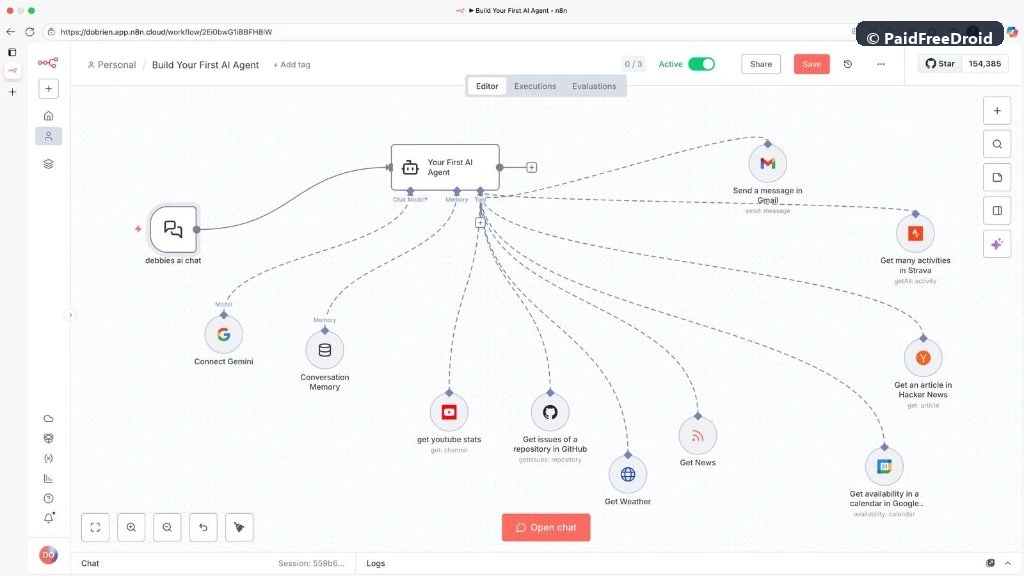
To master agentic architecture, dive into two exceptional free courses:
- n8n Beginner & Advanced AI Agent Courses: Head over to docs.n8n.io/courses/. This open-source curriculum teaches you how to visually construct production-grade autonomous agents. You will learn to attach conversation memory buffers, wire webhook triggers, integrate live search tools (SerpAPI), and connect communication channels like Slack, Gmail, and GitHub.
- Hugging Face Free Agents Course: Enroll in the Hugging Face Agents Course. This hands-on developer course walks through building agents with open-source models, configuring ReAct (Reasoning + Acting) loops, and implementing Retrieval-Augmented Generation (RAG) using vector databases like Pinecone and Chroma.
By connecting open-source workflow nodes with model intelligence, you transition from an AI consumer into an automation engineer capable of delegating complex operational tasks to autonomous background workers.
Phase 4: Vibe Coding, Cloud Deployment, and Production SEO
The final phase bridges the gap between building an internal AI workflow and shipping a customer-facing product to the open web. The emergence of vibe coding, popularized by building software through natural language interaction with tools like Lovable, Cursor, and Claude Code, allows anyone to turn ideas into production code within minutes.
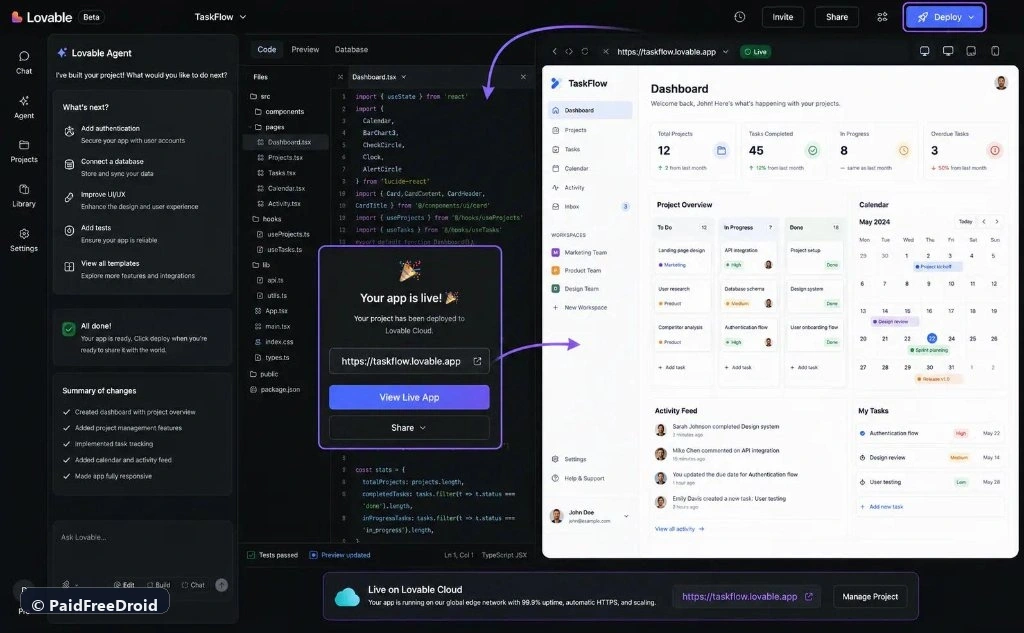
Start by reading the official documentation at docs.lovable.dev. Lovable demonstrates the full power of conversational application scaffolding. You describe your data model, user interface requirements, and authentication flow in plain English, and the agent generates clean React code, configures backend databases via Supabase, and provisions instant preview deployments.
Once your prototype functions, take it to the public internet using industry-standard deployment tools:
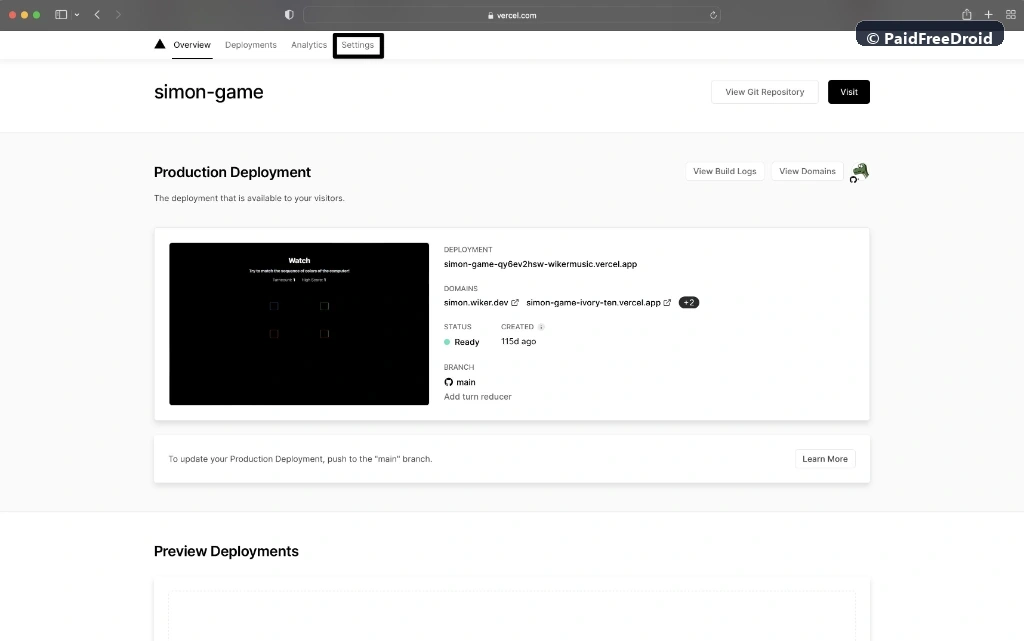
- Vercel Production Deployment: Follow vercel.com/docs to link your GitHub repository to Vercel’s edge network. Vercel automatically compiles your builds, handles serverless functions, provisions SSL certificates, and maps custom domain names in seconds.
- Google Search Console Indexing: An application is useless if nobody can discover it. Set up Google Search Console to submit your XML sitemaps, verify structured data, monitor crawl health, and ensure your new AI tools get indexed by search engines. For a broader library of productivity boosters, review our roundup of essential free developer web utilities.
Frequently Asked Questions About Learning AI for Free
Do I need an expensive local GPU to learn artificial intelligence in 2026?
No. Unless you are fine-tuning proprietary weights or training raw neural networks from scratch, you do not need expensive hardware. Modern AI application development relies entirely on API calls to cloud-hosted frontier models (OpenAI, Anthropic, Google). A standard laptop with a modern web browser and a terminal is more than sufficient.
How can I audit Coursera AI courses without paying for a subscription?
When visiting course pages like Andrew Ng’s AI for Everyone on Coursera, click the enroll button and look for the small text link labeled Audit the course near the bottom of the pop-up modal. Auditing grants full access to all video modules, reading materials, and discussion forums at zero cost.
What is vibe coding and does it replace learning to code?
Vibe coding refers to using conversational AI models (like Claude Code, Lovable, or Cursor) to handle the syntax, boilerplate, and component architecture while you act as the product architect and code reviewer. It does not eliminate the need for logic: you still need to understand data structures, API endpoints, and system architecture to guide and debug the model effectively.
Can I build and deploy functional AI agents using only free tiers?
Yes. Platforms like n8n offer generous self-hosted open-source editions, Google Cloud and OpenAI provide free introductory developer credits, Hugging Face hosts hundreds of free inference APIs, and platforms like Vercel and Supabase provide free starter tiers that easily handle thousands of monthly user requests.
Stay Ahead in the Tech World
Join our community for breaking news, exclusive gadgets coverage & direct admin support.