





Imagine turning a ₹1 crore investment into ₹152 crores or a modest ₹1 lakh into ₹1.52 crores. This isn’t a “get rich quick” scheme but the documented reality of the BSE Sensex over the last 39 years. As of early 2025, the Sensex has scaled to approximately 85,700, delivering a Compound Annual Growth Rate (CAGR) of 13.76% since its inception in 1986. For investors looking to replicate this success without the stress of picking individual stocks, Exchange Traded Funds (ETFs) offer the perfect solution.
The Power of the Sensex: A 39-Year Case Study
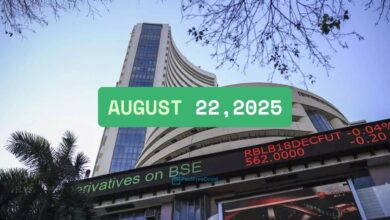
The BSE SENSEX (Sensitivity Index), launched on January 1, 1986, is the pulse of India’s domestic stock market.
- 1986 vs. 2025: From a base value of roughly ₹561 in 1986, the index has skyrocketed to ~₹85,700 in 2025.
- The “Survivor” Benefit: Only 4 of the original 30 companies remain in the index today. This automatic “cleansing” mechanism, where underperformers are removed and rising stars are added, is the biggest safety net for passive investors. You don’t need to track which company is failing; the index does it for you.
- Wealth Creation Math:
| Investment (1986) | Value (2025) | CAGR |
| ₹1 Lakh | ₹1.52 Crore | 13.76% |
| ₹1 Crore | ₹152 Crore | 13.76% |
Why Choose Index Investing (Passive Investing)?
Legendary investor Warren Buffett famously won a bet that a simple S&P 500 index fund would outperform high-fee hedge funds over a decade. The logic applies perfectly to the Indian market in 2026.
- Zero “Stock Picking” Stress: You own the entire market (or sector) rather than betting on one company.
- Lower Costs: ETFs like the Nifty 50 BeES have expense ratios as low as 0.04%, compared to 1-2% for active mutual funds.
- Dividend Advantage: Unlike holding stocks directly, where dividends hit your bank account (and are often spent), growth-option ETFs automatically reinvest dividends, accelerating the power of compounding.
Top Recommended ETFs for Diversification (2026 List)
To build a “bulletproof” portfolio, experts suggest diversifying across market caps and geographies. Here are the top picks based on recent performance data.
1. Domestic Powerhouses (India)
| ETF Name | Focus Area | Expense Ratio | Why Invest? |
| Nifty 50 ETF | Top 50 Large Cap Companies | 0.04% | The “Core” of your portfolio. Lowest risk, steady returns (100%+ in 5 years). |
| Nifty Next 50 ETF | Emerging Blue Chips | 0.05% | Captures the “next giants” before they enter the Nifty 50. High growth potential (123% 5-yr return). |
| Midcap 150 ETF | Mid-Sized Companies | ~0.20% | Higher volatility but historically higher returns than large caps during bull runs. |
| Smallcap 250 ETF | Small Cap Companies | ~0.25% | High risk, high reward. Best for long-term horizons (>7 years). |
| Momentum 30 ETF | Momentum Strategy | ~0.30% | Rules-based investing that buys stocks currently showing the strongest upward trend. |
2. International Exposure (Global Giants)
Don’t limit your wealth to India. Global ETFs allow you to own tech giants like Apple and Tesla.
- MAFANG ETF (Mirae Asset NYSE FANG+):
- Holdings: Facebook (Meta), Apple, Netflix, Google, Tesla, etc.
- Performance: ~27% (1-yr) and 238% (5-yr). This is a high-growth, aggressive bet.
- MON 100 ETF (Motilal Oswal Nasdaq 100):
- Holdings: Top 100 non-financial tech companies in the US.
- Performance: Steady compounding with 152% returns over 5 years.
- Hang Seng ETF:
- Focus: Hong Kong/China market.
- Performance: After years of underperformance, it has rebounded with ~44% returns in the last year, offering a “value buy” opportunity.
3. Thematic Bets (Sector Specific)
- Motilal Oswal India Defense ETF:
- Why Now? With rising global geopolitical tensions and India’s focus on indigenous manufacturing (Atmanirbhar Bharat), defense stocks have seen a structural re-rating.
- Returns: ~18% in the last year.
How to Build Your “Passive” Portfolio
Instead of chasing “hot tips,” construct a balanced pyramid:
- Core (50-60%): Nifty 50 & Nifty Next 50 ETFs (Stability).
- Growth (20-30%): Midcap & Smallcap ETFs (Alpha creation).
- Satellite (10-20%): MAFANG, Hang Seng, or Defense ETFs (Diversification & tactical gains).
Actionable Advice:
- Start a SIP: You don’t need a large lump sum. You can start a weekly or monthly SIP in these ETFs using your Demat account.
- Stay the Course: The 13.76% CAGR of Sensex wasn’t a straight line. It included crashes (2008, 2020) and booms. The key to the ₹152 crore figure was time, not timing.
The journey from 561 to 85,700 points in SENSEX that betting on the Indian economy works. By shifting from active stock picking to smart, low-cost ETF investing, you align your financial future with India’s growth story. Open your Demat account, pick your mix of Nifty, Midcap, and International ETFs, and let the magic of compounding handle the rest.
Tags: Best ETFs for long-term wealth India 2025, Nifty 50 vs Sensex Returns, MAFANG ETF Review, Passive Investing India, Motilal Oswal Defense ETF, Stock Market Wealth Creation, SIP in ETFs
Visit our website daily for latest tech news. Follow Us on Instagram for awesome tech stuff. Also, Join our Telegram Group and connect directly with Admin.