

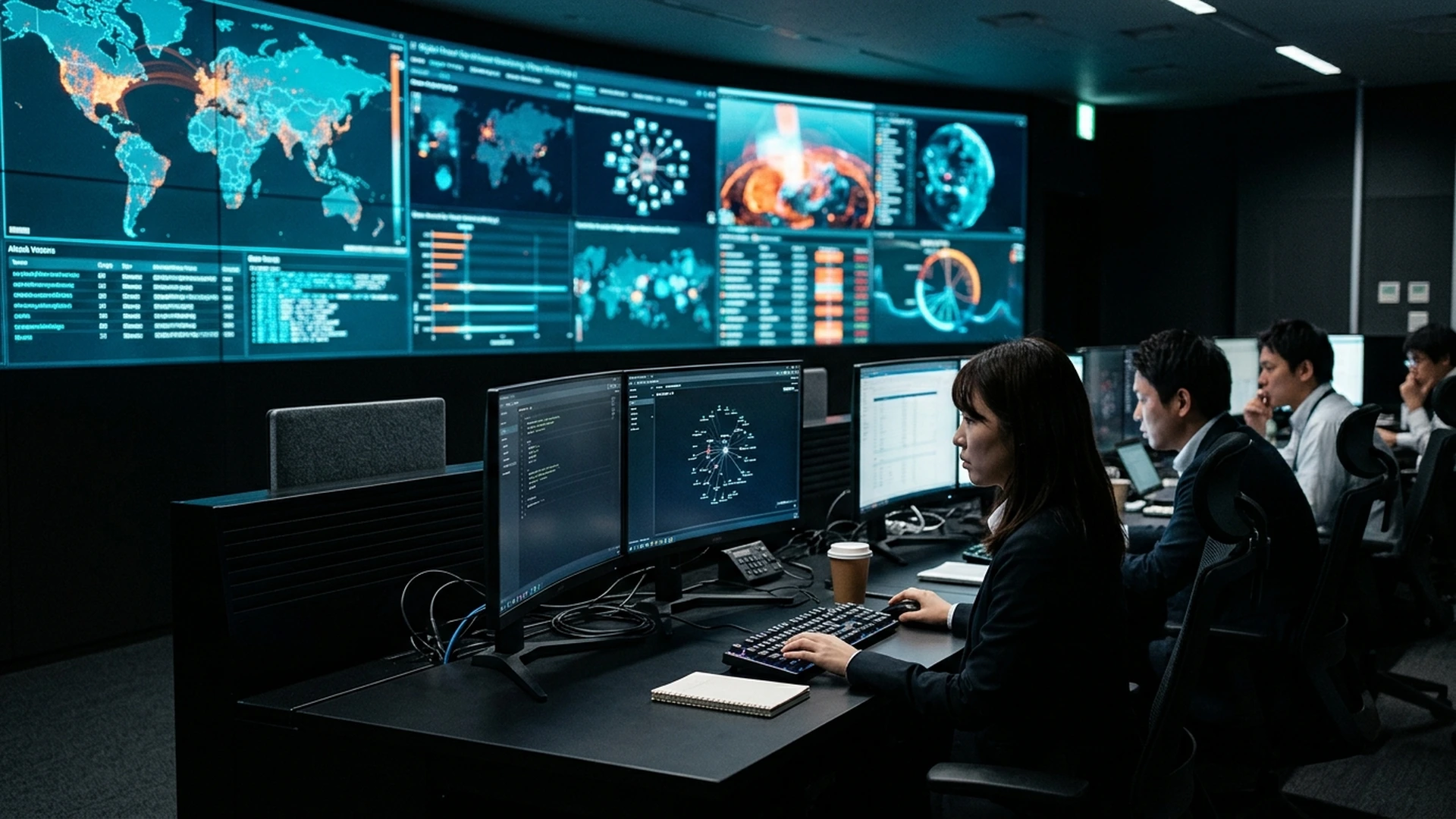
Japan is confronting one of the most extensive supply chain cyber attacks in its history after a catastrophic security breach at cloud email and newsletter delivery service Arara Inc. compromised an estimated 77 million to 81 million email records across approximately 400 corporate, financial, and municipal client organizations. Confirmed victims of the sprawling unauthorized access incident include the City of Osaka, video game titan Sega, and prominent retail operators, prompting the Japanese cabinet to approve an emergency 10 billion yen (roughly $63 million) active cybersecurity defense package to counter escalating digital aggression.
Key Highlights and Attack Scope Across Japan
- Massive Supply Chain Infiltration: Threat actors exploited web server vulnerabilities at third-party cloud messaging provider Arara Inc., accessing internal mail distribution databases containing up to 81 million unique email addresses.
- Osaka Administrative Portal Compromised: The City of Osaka confirmed that 1,078,713 resident email records registered on its digital administrative services platform were leaked via IT contractor TKC Corporation, which relied on Arara’s relay services.
- Sega Gaming Newsletter Data Leaked: Sega disclosed that 2.2 million newsletter subscribers and 92,000 distribution records across 11 product lines were compromised in the vendor breach, though standalone game accounts and passwords remained insulated.
- Weaponized Phishing Outbreak: Attackers immediately hijacked Arara’s verified SMTP mail relays to broadcast millions of malicious phishing emails impersonating major Japanese banks and credit card institutions.
- Emergency ¥10 Billion Cabinet Fund: Prime Minister Sanae Takaichi’s cabinet authorized an emergency 10 billion yen cybersecurity defense package to deploy AI-driven threat hunting teams and activate preemptive cyber defense protocols.
Japan Cyber Attack: Incident Scope, Compromised Entities, and Government Response
| Parameter / Metric | Verified Operational and Technical Details |
|---|---|
| Core Incident Target | Arara Inc. (Cloud email delivery and newsletter distribution infrastructure) |
| Total Data Exposure Scope | 77,000,000 to 81,000,000 email addresses across approximately 400 client organizations |
| Municipal Sector Impact | City of Osaka (1,078,713 administrative portal resident email records leaked via TKC Corporation) |
| Gaming Sector Impact | Sega (2,200,000 newsletter subscriber records and 92,000 distribution entries across 11 services) |
| Corporate Financial Damages | GMO Internet Group (¥3.05 billion impact); Ryohin Keikaku / MUJI (over 1M credit cards exposed) |
| Primary Attack Vector | Web server vulnerability exploitation and unauthorized access to external mail relay databases |
| Secondary Threat Campaign | Mass phishing and credential harvesting campaigns impersonating Japanese financial institutions |
| Core Credentials Leaked | Email addresses and delivery metadata; passwords and payment credentials verified uncompromised at Sega and Osaka |
| National Emergency Package | ¥10 billion ($63 million) government fund approved by Prime Minister Sanae Takaichi’s cabinet |
| Regulatory Countermeasure | Immediate activation of Japan’s Active Cyber Defense framework with AI threat hunting squads |
Supply Chain Breach at Arara: How 77 Million Records Were Compromised
The incident represents a classic supply chain compromise where attackers bypass hardened enterprise perimeters by targeting a specialized third-party utility. Arara Inc. serves as a primary email distribution backbone for hundreds of Japanese commercial platforms, e-commerce giants, and municipal IT integrators. Threat actors identified and exploited vulnerabilities within Arara’s web application servers, gaining unauthorized read access to multi-tenant subscriber databases.

Once inside the infrastructure, the intruders harvested contact lists spanning multiple sectors and hijacked Arara’s high-reputation mail delivery servers. By broadcasting phishing lures directly through authenticated, legitimate email servers, the attackers bypassed standard enterprise spam filters and domain verification protocols. Japanese cybersecurity agencies reported an immediate surge in deceptive emails masquerading as notices from major credit card issuers and financial institutions, directing recipients to fraudulent credential harvesting sites.
The speed and reach of the breach illustrate how modern cloud dependencies create systemic vulnerabilities. While enterprise software developers frequently secure front-end operating systems against zero-day flaws, such as the sandbox bypasses addressed in our recent analysis of the iPhone worse_query sandbox crypto exploit warning, centralized back-office communication vendors remain lucrative aggregation points for malicious threat groups.
Osaka City Government and Sega Disclose Compromised Citizen and Player Portals
The exposure quickly rippled through high-profile Japanese organizations. On November 13, the City of Osaka released an official public advisory revealing that 1,078,713 email addresses linked to its online administrative portal were compromised. The municipal digital service was managed by technology vendor TKC Corporation, which contracted Arara to deliver automated administrative notices, resident confirmations, and public service announcements. Osaka officials confirmed the breach encompassed citizens who used the platform between July 1 and October 31, 2026, and urged residents to remain alert against phishing scams referencing municipal procedures.
Video game multinational Sega also confirmed exposure resulting from the Arara incident. Sega disclosed that approximately 2.2 million newsletter subscribers across 11 game titles and community services had their email addresses and roughly 92,000 distribution records accessed. Sega emphasized that customer passwords, payment information, dates of birth, and central Sega Account credentials remained completely secure, as core gaming networks operate on physically and logically isolated infrastructure entirely separate from marketing distribution channels.
The Arara disclosure arrives amid an intense autumn wave of cyber incidents impacting major Japanese brands, including furniture retailer Nitori, food chain MOS Burger, and entertainment firm Shochiku. Financial service provider GMO Internet Group disclosed an estimated 3.05 billion yen balance sheet impact to cover customer compensation and remediation following related unauthorized access events, while retail giant Ryohin Keikaku reported that over one million credit card records were compromised in a separate attack.
Cabinet Approves Emergency ¥10 Billion Package for Active Cyber Defense
Recognizing the mounting threat to economic security, the Japanese government under Prime Minister Sanae Takaichi enacted an emergency 10 billion yen ($63 million) national defense appropriation. The emergency package marks a historic shift in Japanese security doctrine, directly allocating resources to deploy AI-assisted incident response teams and establish rapid-deployment cyber rescue squads capable of assisting municipalities and small-to-medium businesses.
Crucially, the funding accelerates the operational rollout of Japan’s newly authorized Active Cyber Defense framework. Under traditional legal guidelines, Japanese authorities were restricted to purely passive defense within domestic digital perimeters. The new doctrine empowers specialized national defense teams to access, monitor, and neutralize adversary servers and botnets overseas before malicious payloads execute against critical domestic infrastructure. This national urgency mirrors critical warnings issued globally, such as the CERT-In high-severity advisory on Microsoft zero-day vulnerabilities, where unpatched enterprise infrastructure threatens basic operational continuity.
PFD Context: Japan’s Transition to Preemptive Threat Hunting
The Arara supply chain breach demonstrates that cybersecurity is no longer a localized IT responsibility, but a cornerstone of national resilience. For decades, Japanese enterprise technology relied on specialized domestic vendors operating under high trust assumptions. However, as threat actors weaponize interconnected SaaS pipelines, single vendor vulnerabilities can instantly compromise millions of citizens across government, commerce, and entertainment.
The crisis also coincides with widespread international infrastructure failures, including the recent FAA nationwide ground stop infrastructure failure, where complex digital services collapsed due to fragile internal network pipelines. Japan’s decision to back its emergency response with active defense capabilities signals that passive perimeter firewalls are obsolete. Unless enterprises thoroughly audit their third-party software supply chains and mandate strict data minimization policies, adversaries will continue exploiting secondary vendors to hold national infrastructure hostage.
Stay Ahead in the Tech World
Join our community for breaking news, exclusive gadgets coverage & direct admin support.

