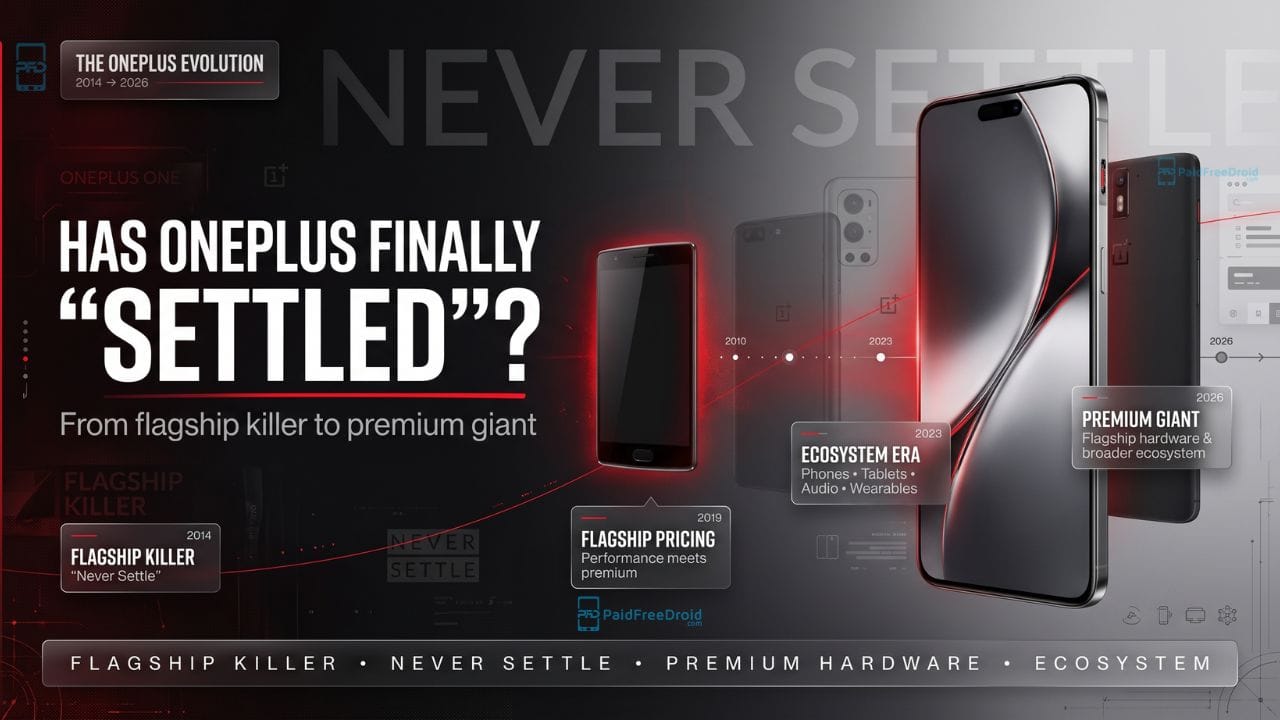
“Never Settle.”
For years, that two-word mantra was the battle cry of the ultimate smartphone underdog. When OnePlus burst onto the scene, the company challenged the entire smartphone industry by delivering flagship-tier performance at aggressive, mid-range prices. Today, however, the landscape looks drastically different. Prices have risen, the iconic software infrastructure has fundamentally changed, and the brand is executing a massive global strategic pivot.
Is OnePlus still trying to disrupt the smartphone market, or has it matured into its role as a premium mainstream brand? Here is a comprehensive PFD analysis of how OnePlus evolved, where the brand is heading in 2026, and the official transition of its software ecosystem.
Genesis: The “Flagship Killer” Era
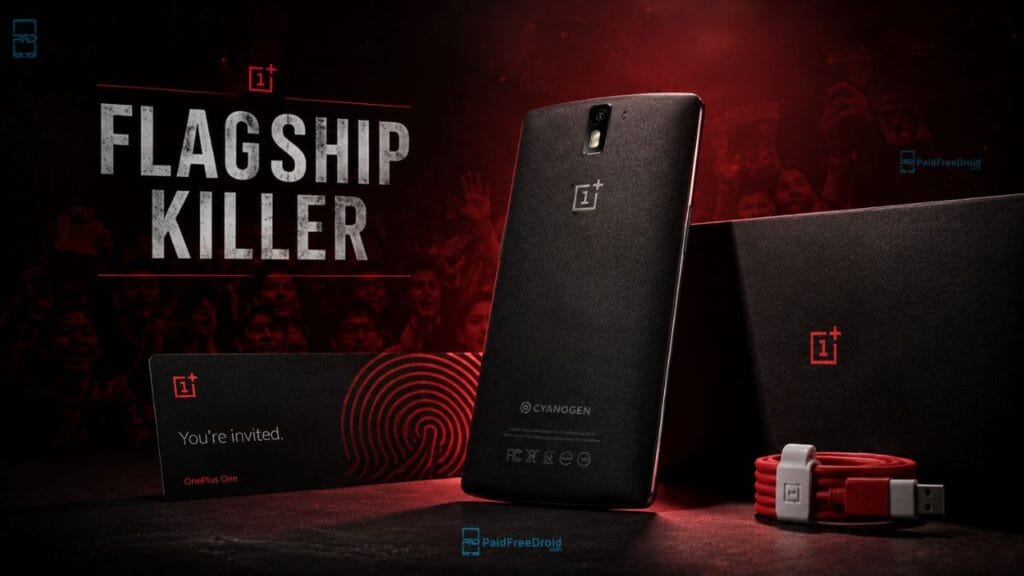
Back in 2014, the smartphone market was rigidly divided between expensive premium devices and severely compromised budget phones.
- Aggressive Pricing: The original OnePlus One launched at just Rs. 21,999 for the 16GB model, offering the same premium Snapdragon 801 processor and 3GB of RAM expected from Android phones costing twice as much.
- Enthusiast Scarcity: To manage manufacturing risks, the company utilized a notorious “invite-only” system, which transformed accessibility into a digital commodity and built an incredibly vocal enthusiast community.
- Clean Software: Following a split with Cyanogen, the brand launched OxygenOS – a clean, near-stock, and highly optimized Android experience.
- Unique Hardware: Innovations like proprietary fast-charging (Dash Charge) and the beloved physical Alert Slider became structural staples of the brand.
Software Convergence: Shift to ColorOS
Today, the software direction is entirely different, as the barrier between OnePlus and its parent company, OPPO, has officially dissolved.
- Codebase Merger: In 2021, OnePlus and OPPO integrated their operations, placing OxygenOS and ColorOS on a shared codebase.
- Global Transition: In 2026, OnePlus officially confirmed that OxygenOS is giving way to ColorOS as the brand’s distinct global software direction.
- ColorOS 17: Current eligible OnePlus owners are being offered a voluntary upgrade to ColorOS 17. Maintaining a single global software platform for an estimated 740 million users is more cost-effective for the company, significantly reducing duplicate development and speeding up update rollouts.
Maturation, Price Hikes, and Strategic Shifts
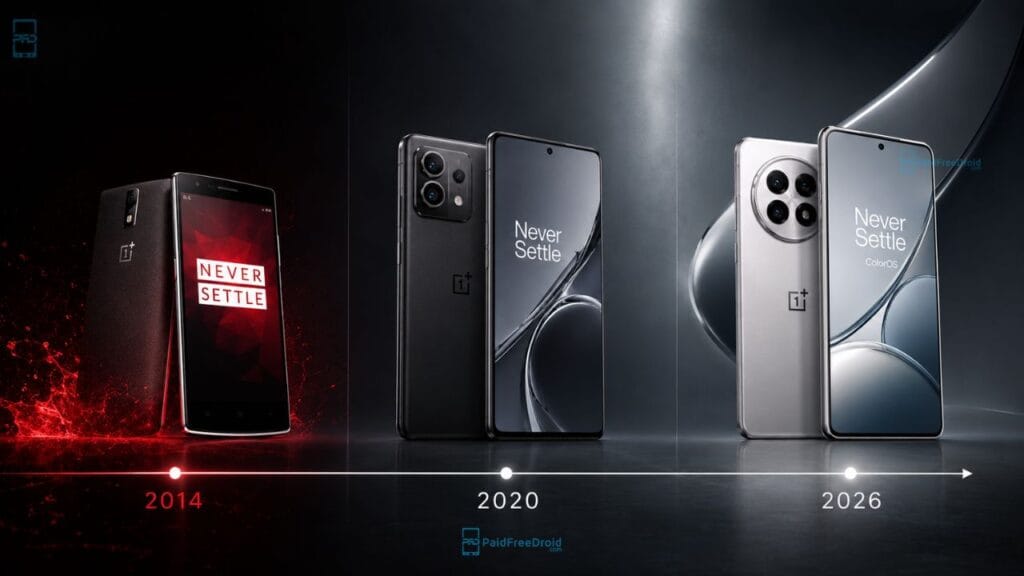
The “flagship killer” has officially moved into flagship pricing. However, this price surge is backed by heavily refined, top-tier hardware configurations.
- Premium Hardware Limits: Modern devices like the recently launched OnePlus 15R feature cutting-edge specifications, including the Snapdragon 8 Gen 5 processor and a massive 7,400 mAh battery with 80W SUPERVOOC charging.
- Cost of Scaling: Better camera sensors (via Hasselblad partnerships), official water resistance ratings, long-term software support cycles, and global advertising campaigns all require immense capital. The original razor-thin margins of 2014 were never sustainable at a global scale.
- 2026 Market Pivot: In a massive strategic shift this year, OnePlus announced it is ending new product launches in North America and Europe. The brand is pulling back from hostile, thin-margin Western markets to focus its engineering, service, and retail machinery heavily on China and India.
PFD Context:
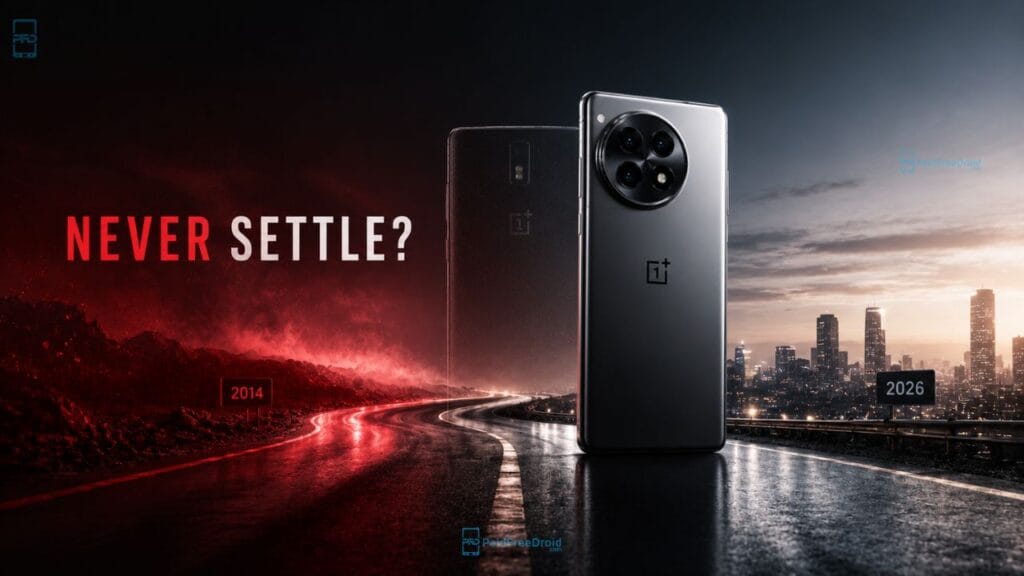
Has OnePlus “settled”? If we define settling as abandoning the disruptive ₹25,000 flagship-killer model, then yes, it absolutely has. But from a purely analytical standpoint, that is not necessarily a bad thing. The modern smartphone market is incredibly hostile to thin margins; the indie enthusiast brand had to fade away for the premium mainstream manufacturer to survive.
Today’s OnePlus phones are objectively better, infinitely more polished, and supported by a much more reliable hardware ecosystem than anything the company built during its infancy. While losing the clean, independent OxygenOS identity to ColorOS 17 undoubtedly hurts the nostalgia factor for early adopters, the integration practically guarantees faster updates and better long-term stability. OnePlus is no longer trying to disrupt the premium market from the bottom up – they are simply trying to lead it from within.
Do you miss the scrappy, underdog days of the old OnePlus, or do you prefer the polished, highly mature ecosystem that the brand operates today?
Stay Ahead in the Tech World
Join our community for breaking news, exclusive gadgets coverage & direct admin support.