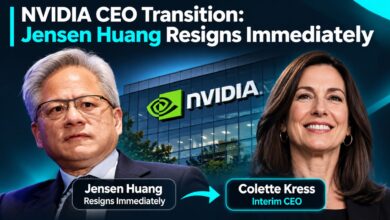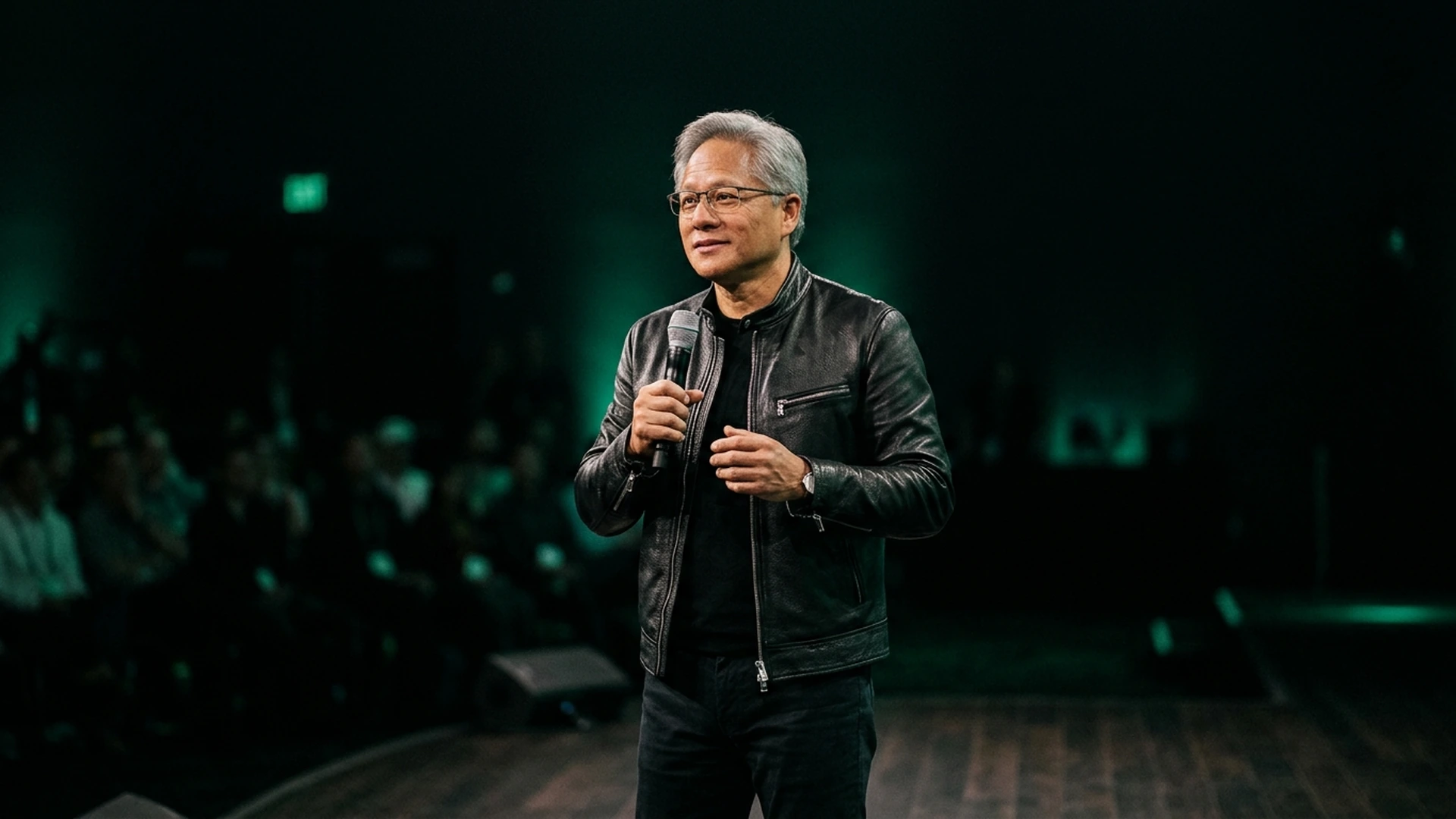
Former NVIDIA chief executive Jensen Huang has broken his public silence for the first time since his sudden resignation on November 12, 2026. In an extraordinary public statement published on X (formerly Twitter) under his updated profile title as “Founder of NVIDIA,” Huang admitted to “serious mistakes” in his personal life, apologized for the operational disruption caused to the board of directors, and explicitly declared that he would be “honored” to return as CEO if the board and shareholders determine it is in the best interest of the company and the United States.
Key Highlights of Jensen Huang’s Statement
- First Public Remarks Since Resignation: Huang broke five days of silence following his abrupt departure after 33 years leading the world’s most valuable semiconductor company.
- Admission of Personal Misconduct: Acknowledged failing to meet company ethical standards and creating problems for the board, while committing full cooperation with the ongoing independent investigation.
- Explicit Offer to Return as CEO: Directly confirmed his readiness to resume executive leadership if called upon by the board of directors, shareholders, and employees.
- Billionaire and Political Campaign: Follows public endorsements from President Donald Trump and an open letter from prominent tech investors Gavin Baker and Brad Gerstner urging the board to avoid a rushed permanent replacement.
- Internal Governance Counterweight: The NVIDIA board remains cautious amid independent scrutiny by law firm Wachtell Lipton into alleged foreign intelligence entanglements and newly scrutinized family governance structures surrounding Madison Huang.
NVIDIA Leadership Crisis: Stakeholder Positions and Governance Matrix
The fallout from Huang’s exit has triggered a rare public tug-of-war between Silicon Valley luminaries, institutional shareholders, federal political leaders, and NVIDIA’s independent directors:
| Key Stakeholder | Current Official Stance | Core Strategic Motivation |
|---|---|---|
| Jensen Huang | Public contrition; ready to return as CEO if requested | Seeks leadership restoration while clearing personal reputation |
| NVIDIA Board of Directors | Reinstatement not actively planned; running independent probe | Protecting fiduciary standards, export compliance, and institutional trust |
| Trump Administration | Supports reinstatement; downplays national security risks | Maintaining American dominance in global AI compute infrastructure |
| Wall Street Tech Investors | Urging measured deliberation; open letter by Gavin Baker & Brad Gerstner | Preventing valuation destruction and preserving architectural momentum |
| Interim Executive Team | Led by interim CEO Colette Kress; maintaining operational continuity | Executing Q3 earnings and rolling out next-generation Rubin hardware |
Inside the Public Apology and Offer to Return as CEO
Huang’s statement marks a dramatic shift in tone from the tight-lipped corporate memo that accompanied his initial departure, detailed in our original coverage of the NVIDIA CEO transition and Jensen Huang’s initial resignation. Writing directly to his followers, the 63-year-old tech visionary framed his life and career through the lens of the American dream, reflecting on his immigrant roots and decades spent constructing the world’s leading accelerated computing ecosystem.
“Over the past week, I have been overwhelmed by the love and support of friends, industry colleagues, and people I have never met. Thank you to everyone who has shown kindness to my family and me. It means the world to me. I came to the United States 53 years ago, and becoming an American is the greatest blessing of my life. America gave me everything. I love NVIDIA with all my heart. Serving as its CEO has been the honor of my lifetime. I made serious mistakes in my personal life and failed to live up to the high standards expected of our leadership. I apologize to the Board, our shareholders, and our incredible team for the disruption this has caused. If the Board and our shareholders believe it is in the best interest of the company and our nation, I would be honored to return as CEO.”
Jensen Huang, Founder of NVIDIA
Huang also addressed the formal governance proceedings currently underway, stating: “I am cooperating fully with the Board’s independent review and have complete confidence in their process. NVIDIA is greater than any one person. Our mission to build the engine of the intelligence age will continue.”
Billionaire Backing and Political Leverage: Trump, Musk, and Gerstner
Huang’s public overture follows an orchestrated wave of external pressure on NVIDIA’s board from influential investors and political figures. Over the weekend, Silicon Valley venture capitalists and institutional hedge funds mobilized to advocate for Huang’s preservation within the company hierarchy.
In a joint open letter published directly to NVIDIA’s board, Atreides Management founder Gavin Baker and Altimeter Capital CEO Brad Gerstner urged directors to resist pressure to rapidly appoint an external replacement. Baker and Gerstner argued that the board must pursue a “slow, measured, and deliberate process,” emphasizing that finding an outside executive capable of replicating Huang’s 33-year technical command across CUDA software, networking silicon, and GPU packaging is near impossible without endangering enterprise value.
Their arguments echoed an impassioned public petition titled “Stand with Jensen,” backed by Tesla CEO Elon Musk and Epic Games chief Tim Sweeney. The pressure intensified further when President Donald Trump told reporters aboard Air Force One that he “would not mind” seeing Huang returned to the chief executive suite, publicly downplaying espionage claims and suggesting Huang had “learned a big lesson.”
Why the Board Hesitates: Madison Huang and Family Governance Scrutiny
Despite heavy outside lobbying, sources close to the NVIDIA board indicate directors are reluctant to rush into a reversal. The board’s caution extends beyond Huang’s personal relationships to broader corporate governance questions raised by investigative reports in The Wall Street Journal, The New York Times, and the Financial Times.
Recent reporting brought intense scrutiny to the outsized operational authority exercised by Huang’s immediate family within NVIDIA’s hierarchy. In particular, his 35-year-old daughter, Madison Huang, who serves as senior director of product marketing for physical AI and Omniverse, has drawn significant board attention. Former and current employees described Madison as functioning as Jensen’s de facto chief of staff, wielding authority that occasionally bypassed traditional reporting structures.
Reporting revealed instances of internal tension, including a high-profile preparation meeting ahead of the India AI Summit where senior executive Jay Puri pushed back against intense verbal criticism. With Huang’s son Spencer serving as robotics director and son-in-law Nico Caprez directing AI infrastructure growth, institutional governance advisors have raised questions regarding internal oversight. Independent legal counsel from Wachtell, Lipton, Rosen & Katz is currently conducting a comprehensive review of both personal conduct issues and executive governance safeguards.
Leadership Dynamics: Colette Kress, Rubin Architecture, and Upcoming Earnings
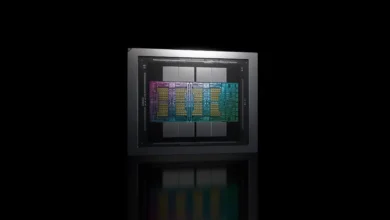
While the leadership drama unfolds in public, NVIDIA operations are functioning under interim chief executive and longtime CFO Colette Kress. Kress has moved swiftly to reassure hyperscale cloud customers that roadmap delivery remains on schedule, reinforced by the high-profile NVIDIA Rubin HPC GPU architecture unveiling at the SC26 supercomputing conference.
With quarterly earnings fast approaching, institutional investors are closely monitoring whether the governance uncertainty impacts international chip procurement. National governments and enterprise customers are increasingly evaluating supply chain dependencies, mirroring broader sovereignty discussions examined in our reporting on national semiconductor supply chain autonomy initiatives.
PFD Context: Corporate Sovereignty and the Founder-Led Era
The standoff at NVIDIA represents a defining test of corporate governance in the AI era. For three decades, Jensen Huang personified NVIDIA, driving its transformation from a PC graphics startup into the foundation of global artificial intelligence. Yet as semiconductor firms become vital assets of national power, the boundaries between founder autonomy and institutional oversight are being redrawn. Whether Huang returns or passes the baton permanently, the resolution will establish a critical precedent for how trillion-dollar tech giants navigate personal conduct, family influence, and geopolitical accountability.
Stay Ahead in the Tech World
Join our community for breaking news, exclusive gadgets coverage & direct admin support.