
Insomniac Games has officially deployed update v1.006 for Marvel’s Spider-Man 2, introducing Sony’s newly developed Quick Spectral Super Resolution (QSSR) to the standard, base PlayStation 5 🏆 console. The surprise patch marks the first commercial deployment of Sony’s machine-learning temporal reconstruction technology on launch-model hardware, delivering cleaner geometric edges, sharper texture detail, and reduced temporal shimmering across both Fidelity and Performance graphics modes without requiring gamers to upgrade to a PS5 Pro.
Key Highlights of Spider-Man 2 Patch v1.006
- Base PS5 AI Upscaling Debut: Patch v1.006 brings QSSR support directly to standard PlayStation 5 and PS5 Slim models, deploying neural image reconstruction on AMD RDNA 2 hardware.
- Dual Graphics Mode Support: Insomniac Head of Technology Mike Fitzgerald confirmed that QSSR is fully active across both Fidelity (30 FPS and 40 FPS 120Hz modes) and Performance (60 FPS) modes.
- Reduced Shimmer and Sharper Resolution: The machine-learning algorithm significantly reduces sub-pixel aliasing on fine geometric structures, such as Manhattan skyscraper window frames, power lines, and Spider-Man’s suit webbing.
- Project Amethyst Heritage: Developed through Sony Interactive Entertainment’s Project Amethyst collaboration with AMD, QSSR adapts the mathematical principles of PS5 Pro’s PSSR into a streamlined compute shader implementation.
- Broader PlayStation Expansion: Sony confirmed that QSSR will roll out across additional major titles, including Control Resonant, No Man’s Sky, The Finals, Arc Raiders, and Hell Let Loose: Vietnam.
Spider-Man 2 PS5 Patch v1.006: Graphics Modes and Upscaling Architecture
| Technical Parameter | Standard Base PS5 (Legacy TAA) | Base PS5 Patch v1.006 (QSSR) | PlayStation 5 Pro (PSSR) |
|---|---|---|---|
| Upscaling Method | Temporal Anti-Aliasing (TAA) with spatial sharpening | Quick Spectral Super Resolution (QSSR) Machine Learning | PlayStation Spectral Super Resolution (PSSR) Hardware ML |
| Hardware Execution Layer | Standard GPU compute shaders | Hand-tuned lightweight neural net on AMD RDNA 2 GPU | Custom dedicated AI hardware / tensor processing blocks |
| Fidelity Mode Target | Dynamic 1440p to 4K at 30 FPS / 40 FPS (120Hz) | Dynamic 1440p upscaled to 4K with enhanced edge stability | Full 4K output with advanced ray tracing at 60 FPS |
| Performance Mode Target | Dynamic 1080p to 1440p at 60 FPS | Dynamic 1080p reconstructed to clean 1440p/4K at 60 FPS | Dynamic 1440p to 4K at steady 60 FPS with ray-traced reflections |
| Temporal Stability & Ghosting | Moderate motion blur trailing and fine-line shimmering | Significantly reduced shimmering and stable sub-pixel edges | Maximum temporal stability with near-native 4K sharpness |
| Compute Budget Overhead | Minimal (standard raster pipeline) | Under 1.5ms per frame overhead (optimized for base GPU) | Offloaded to dedicated NPU hardware units |
| Applicable Hardware | Standard PS5 (2020) and PS5 Slim (2023) | Standard PS5 (2020) and PS5 Slim (2023) | PlayStation 5 Pro exclusively |
Project Amethyst and QSSR: Machine-Learning Reconstruction on Base PS5 Hardware
The arrival of QSSR in Marvel’s Spider-Man 2 stems from an ongoing engineering collaboration between Sony Interactive Entertainment and AMD code-named Project Amethyst. First revealed by Daniel Craig, Principal Engineer for Graphics R&D at SIE, the initiative aimed to solve a fundamental hardware challenge: how to deliver the clarity of neural upscaling on consoles built before dedicated machine-learning accelerators became standard.
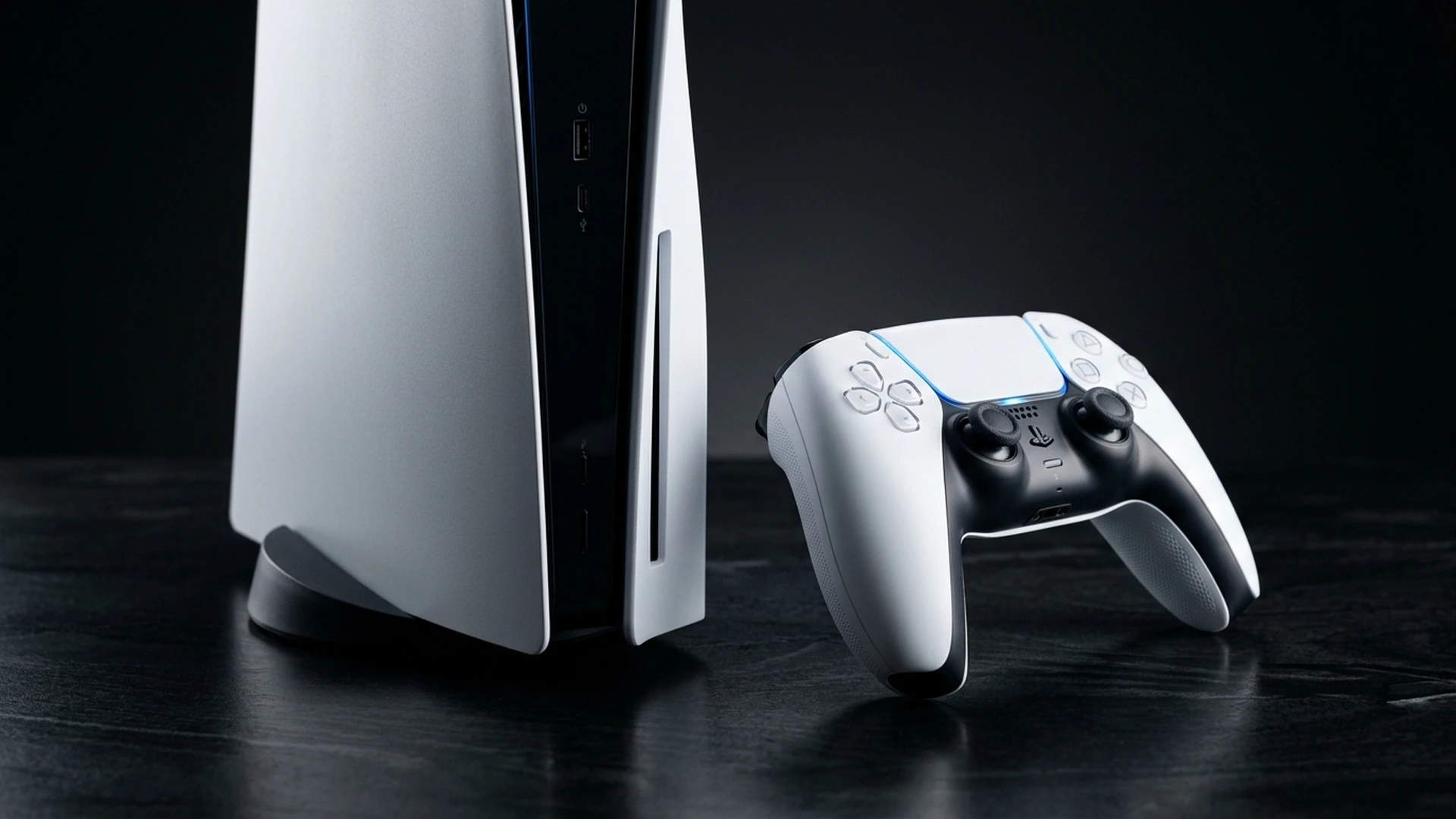
While the PlayStation 5 Pro relies on bespoke tensor architecture to drive PSSR, QSSR uses a streamlined neural network specifically hand-tuned for the standard PS5’s AMD RDNA 2 compute units. By analyzing motion vectors, previous frame history, and high-frequency color buffers, QSSR intelligently reconstructs sub-pixel details that conventional Temporal Anti-Aliasing (TAA) routines blur or drop during rapid camera movements.
This technical optimization arrives alongside broader industry improvements in real-time graphics rendering. Just as PC gaming architectures benefit from low-level subsystem refinements covered in our breakdown of the Windows 11 gaming optimizations, console developers are increasingly extracting untapped computational margins from existing silicon through tailored algorithmic design.
Fidelity vs Performance: Visual Gains Across Insomniac’s Graphics Modes
In Marvel’s Spider-Man 2, the primary visual bottleneck on base hardware has always been motion complexity. When swinging between Manhattan high-rises at maximum velocity, conventional TAA struggled with geometric scintillation across distant window grids, metallic fire escapes, and suspension cables. Under patch v1.006, Insomniac’s implementation of QSSR replaces legacy reconstruction passes, providing an immediately visible boost in stability.
Insomniac Head of Technology Mike Fitzgerald noted that QSSR operates seamlessly across both core graphics configurations:
- Fidelity Mode: Running with a target of 30 frames per second (or 40 frames per second on 120Hz VRR displays), QSSR resolves fine textural micro-details on Peter Parker and Miles Morales’ suit fabrics, ambient foliage, and distant vehicular traffic with clarity approaching native 4K presentation.
- Performance Mode: Operating at 60 frames per second, where base internal rendering resolutions occasionally scale down to preserve frame budgets during heavy combat encounters, QSSR reconstructs clean, razor-sharp edges without the smearing or ghosting artifacts common to older temporal upscalers.
Crucially, internal frame pacing remains locked. Because Sony and Insomniac engineered QSSR’s inference pass to execute within an ultra-tight frame budget under 1.5 milliseconds, the visual upgrade introduces zero frame rate drops or input latency spikes during fluid web-swinging or combat combos.
Broader PlayStation Rollout: Control Resonant, No Man’s Sky, and Arc Raiders Next
Marvel’s Spider-Man 2 represents the flagship spearhead of a broader ecosystem rollout. Sony officially confirmed that because QSSR shares a unified API pipeline with PSSR, developers who have already optimized their titles for PS5 Pro can backport enhanced reconstruction to base PS5 consoles with minimal integration overhead.
Remedy Entertainment will introduce QSSR support to Control Resonant in an upcoming December update. Additional confirmed titles scheduled to receive QSSR patches include Hello Games’ No Man’s Sky, Embark Studios’ The Finals, extraction shooter Arc Raiders, and tactical shooter Hell Let Loose: Vietnam. Furthermore, upcoming first-party blockbusters Marvel’s Wolverine and Ghost of Yotei will launch with native QSSR support out of the box.
The timing of these visual upgrades coincides with historic player engagement retrospectives across the industry, including Microsoft’s newly launched Xbox Playback 25th anniversary lifetime stats, as platform holders emphasize ongoing long-term value for their established hardware bases ahead of anticipated holiday releases like the GTA 6 preload and install size launch window.
PFD Context: Extending Hardware Lifecycles Without Mid-Gen Upgrades
The release of QSSR on base PlayStation 5 hardware delivers an important lesson in consumer-friendly graphics engineering. When Sony announced the $700 PlayStation 5 Pro, console gamers expressed understandable concern that standard 2020 hardware would be relegated to soft, low-resolution rendering as current-gen engines grew increasingly demanding.
By backporting neural reconstruction to the base PS5’s RDNA 2 GPU, Sony and Insomniac demonstrate that intelligent software optimization can deliver meaningful generational uplifts without requiring players to replace functional hardware. While the PS5 Pro retains a definitive raw performance advantage with advanced hardware ray tracing, QSSR ensures that over 65 million standard PS5 owners continue enjoying pristine visual fidelity well into the second half of the console lifecycle.