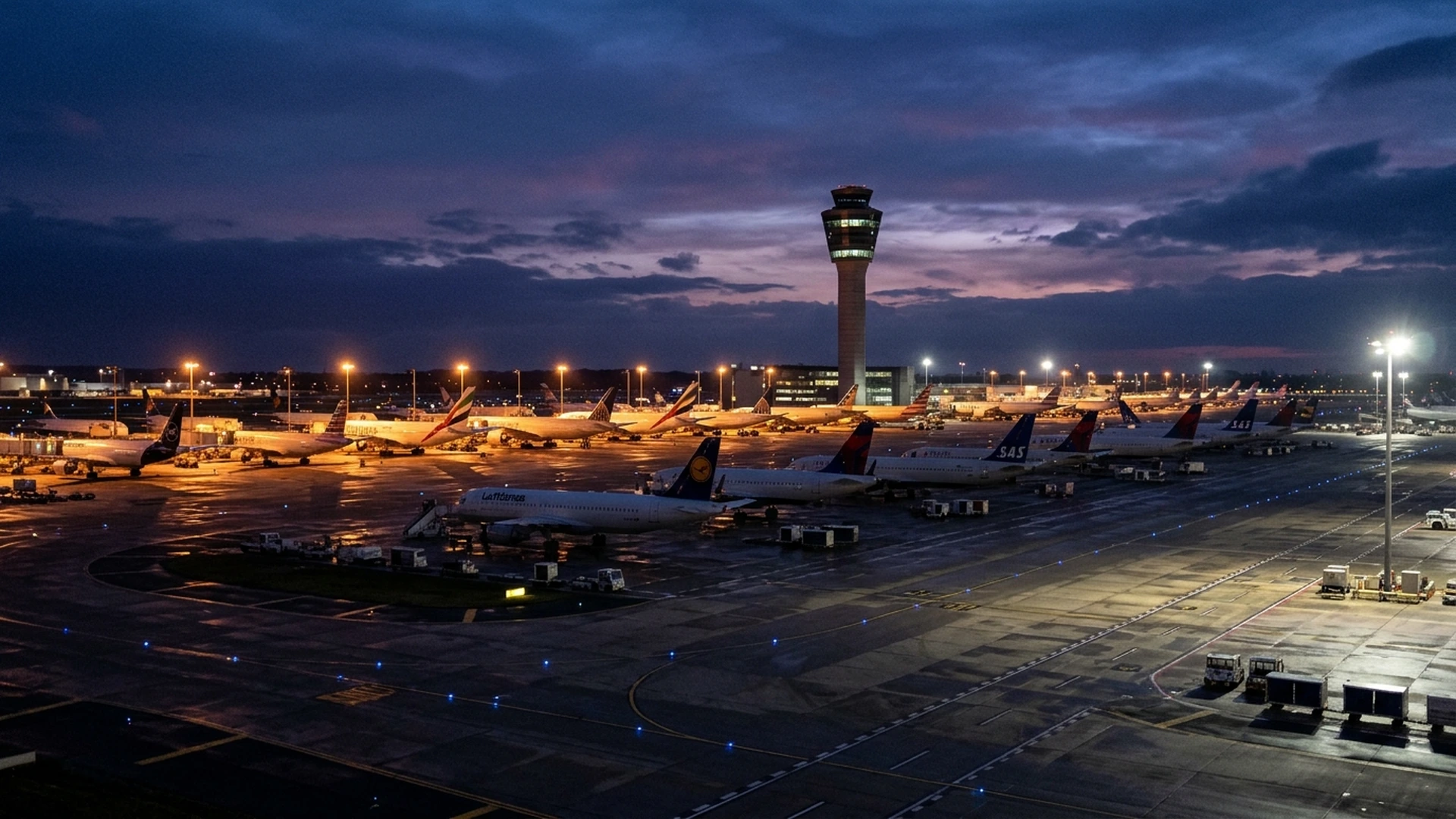
The US Federal Aviation Administration (FAA) issued a rare nationwide ground stop halting all commercial flight departures across the United States on Friday afternoon, following a catastrophic telecommunications and network router failure that crippled regional air traffic control centers. The ground stop froze departures for approximately four and a half hours, stranding hundreds of thousands of passengers and triggering over 10,000 flight delays and cancellations nationwide before air traffic controllers safely restored communication channels late Friday evening.
Key Highlights and National Ground Stop Scope
- Rare Nationwide Flight Freeze: The FAA ordered an immediate departure ground stop across continental US airspace starting around 3:54 PM Eastern Time on Friday, marking only the second nationwide airspace halt since the September 11 terrorist attacks.
- Telecommunications Router Overload: Federal transportation officials confirmed that aging telecommunication switches and network routers suffered severe data overload following a routine software update, severing automated flight plan distribution between regional radar facilities.
- 10,000 Flights Disrupted: Over 10,000 commercial flights were delayed or canceled across major US hubs including Chicago O’Hare, Atlanta Hartsfield-Jackson, Dallas-Fort Worth, and New York LaGuardia, with airline operational recovery expected to extend through the weekend.
- No Cyberattack Involved: Transportation Secretary Sean Duffy and Department of Homeland Security Secretary Markwayne Mullin publicly confirmed that forensic investigations found zero evidence of a cyberattack, hostile state interference, or external breach.
- Airspace Reopened: Air traffic control facilities successfully verified router stability and lifted the nationwide ground stop at approximately 8:15 PM Eastern Time, though severe rolling delays persist due to displaced flight crews and aircraft.
FAA Nationwide Ground Stop: Incident Scope and Systems Matrix
| Parameter / Metric | Operational Status and Verification Details |
|---|---|
| Incident Event | FAA Nationwide Commercial Departure Ground Stop |
| Initial Outage Trigger | Telecommunications router overload and switch packet drops during routine maintenance |
| Primary Facilities Affected | Chicago TRACON (ZAU), regional Air Route Traffic Control Centers (ARTCC), and national command feeds |
| Start Timestamp | Friday, November 13, 2026, at 3:54 PM Eastern Time (EST) |
| Airspace Reopening | Friday, November 13, 2026, at 8:15 PM Eastern Time (EST) |
| Total Outage Duration | Approximately 4 hours and 21 minutes of complete departure halt |
| Commercial Flight Impact | Over 10,000 flights delayed or canceled across continental US carriers |
| Major Hubs Impacted | Chicago O’Hare (ORD), Atlanta (ATL), Dallas-Fort Worth (DFW), Denver (DEN), New York (LGA/JFK/EWR) |
| Cybersecurity Assessment | USDOT and DHS confirmed zero external breach, malware, or cyberattack |
| Infrastructure Backbone | FAA Telecommunications Infrastructure (FTI) / L3Harris enterprise network interface |
| Operational Recovery Status | Airspace active; multi-day airline schedule recovery in progress due to crew duty-time limits |
Overloaded Routers and Legacy Infrastructure Knock Out FAA Telecommunications
The crisis originated inside the telecommunications fabric connecting regional air traffic control centers with national flight-tracking databanks. According to preliminary reports from the FAA and the US Department of Transportation, network routers and automated data switches responsible for routing aircraft flight plans, radar data, and transponder altitude feeds became overloaded with telemetry data packets.
Federal officials revealed that the overload occurred shortly after technicians deployed scheduled system updates across components of the FAA Telecommunications Infrastructure (FTI). The unexpected influx of telemetry data caused key routing hardware to fail silently, dropping packet queues and preventing local controllers from receiving verified, automated flight clearance strips. Rather than risk operating high-density commercial corridors with partial radar telemetry, the FAA enacted a ground stop across all domestic airports out of caution.
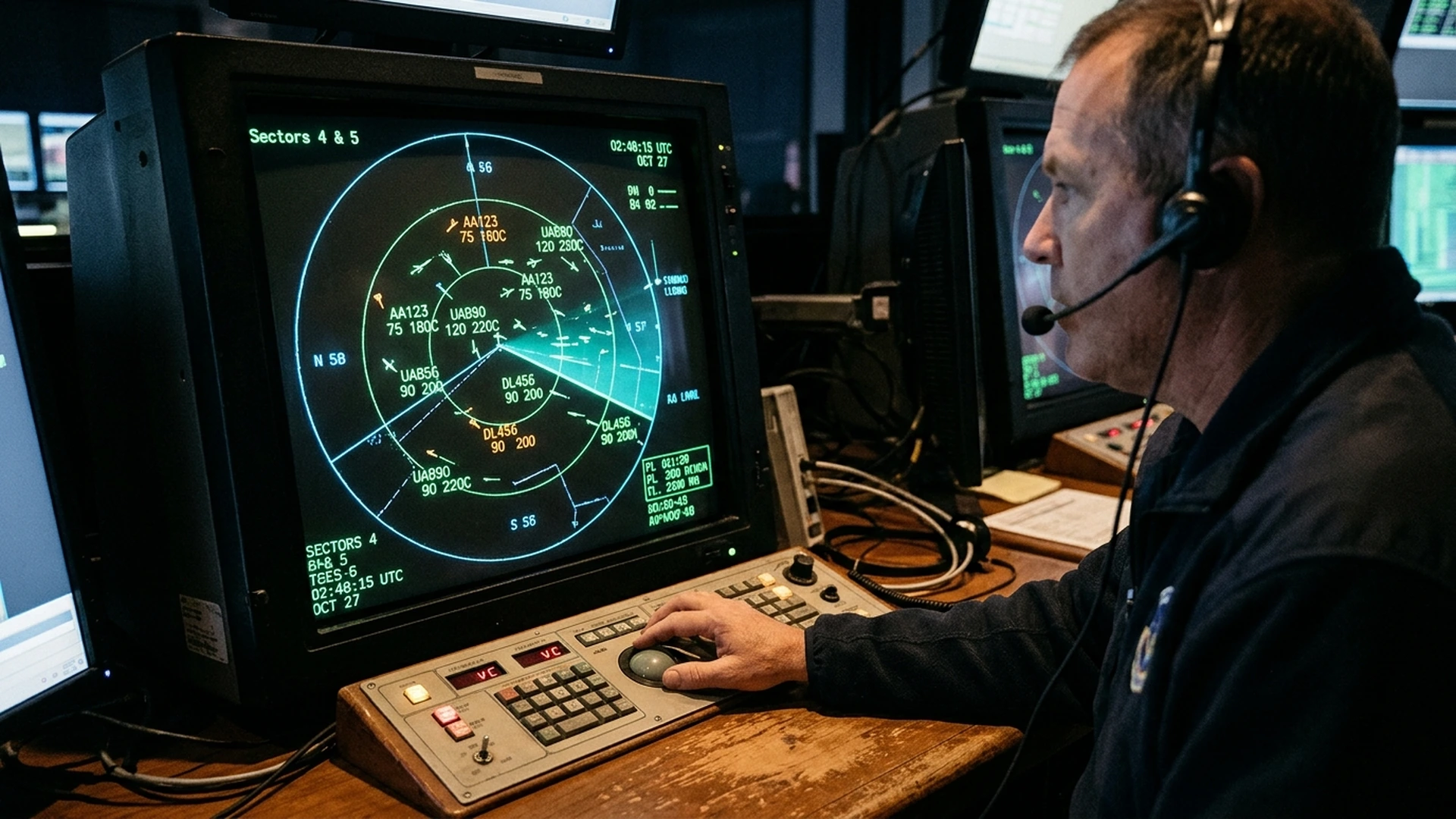
The failure directly highlights the ongoing friction between modern aviation demands and legacy government networks. While the FAA has spent over a decade migrating systems toward modern fiber networks under its NextGen aviation initiative, critical segments of air traffic control routing continue to rely on aging infrastructure and copper circuits managed by federal contractors like L3Harris. When a secondary router cluster failed to handle automated failover traffic, packet collisions propagated through adjacent regional centers within minutes.
Cascading Freeze: How Chicago Radar Outage Froze US Airspace
The disruption first manifested at the Chicago Air Route Traffic Control Center in Aurora, Illinois, and the Chicago Terminal Radar Approach Control (TRACON) facility in Elgin. Chicago airspace serves as the central circulatory valve for transcontinental US aviation, handling heavy traffic flows between East Coast corridors and West Coast hubs. When Chicago controllers lost real-time digital handoffs for outbound departures at O’Hare International Airport (ORD) and Midway International Airport (MDW), FAA supervisors instituted an immediate local ground halt.
Because domestic flight corridors operate on tightly packed sequential slots, halting departures out of Chicago triggered instant gridlock across surrounding airspace. Flights scheduled to take off from New York, Atlanta, Charlotte, and Dallas toward Midwestern destinations were forced to hold at gates to avoid clogging holding patterns around blind approach sectors. By 4:15 PM EST, the FAA Command Center in Warrenton, Virginia, determined that telecommunication degradation was spreading into adjacent regional facilities, prompting the decision to escalate the local hold into a mandatory nationwide departure freeze.
Airborne flights already aloft were not forced to land prematurely. High-altitude radar displays and primary voice radio frequencies remained functional, allowing en-route controllers to guide cruising aircraft safely to their destinations. However, zero new commercial aircraft were permitted to push back from gates or enter active taxiways, leaving tarmacs packed with fully boarded airliners across dozens of major metropolitan airports.
Aviation Backlog and Airline Operations: Over 10,000 Flights Delayed
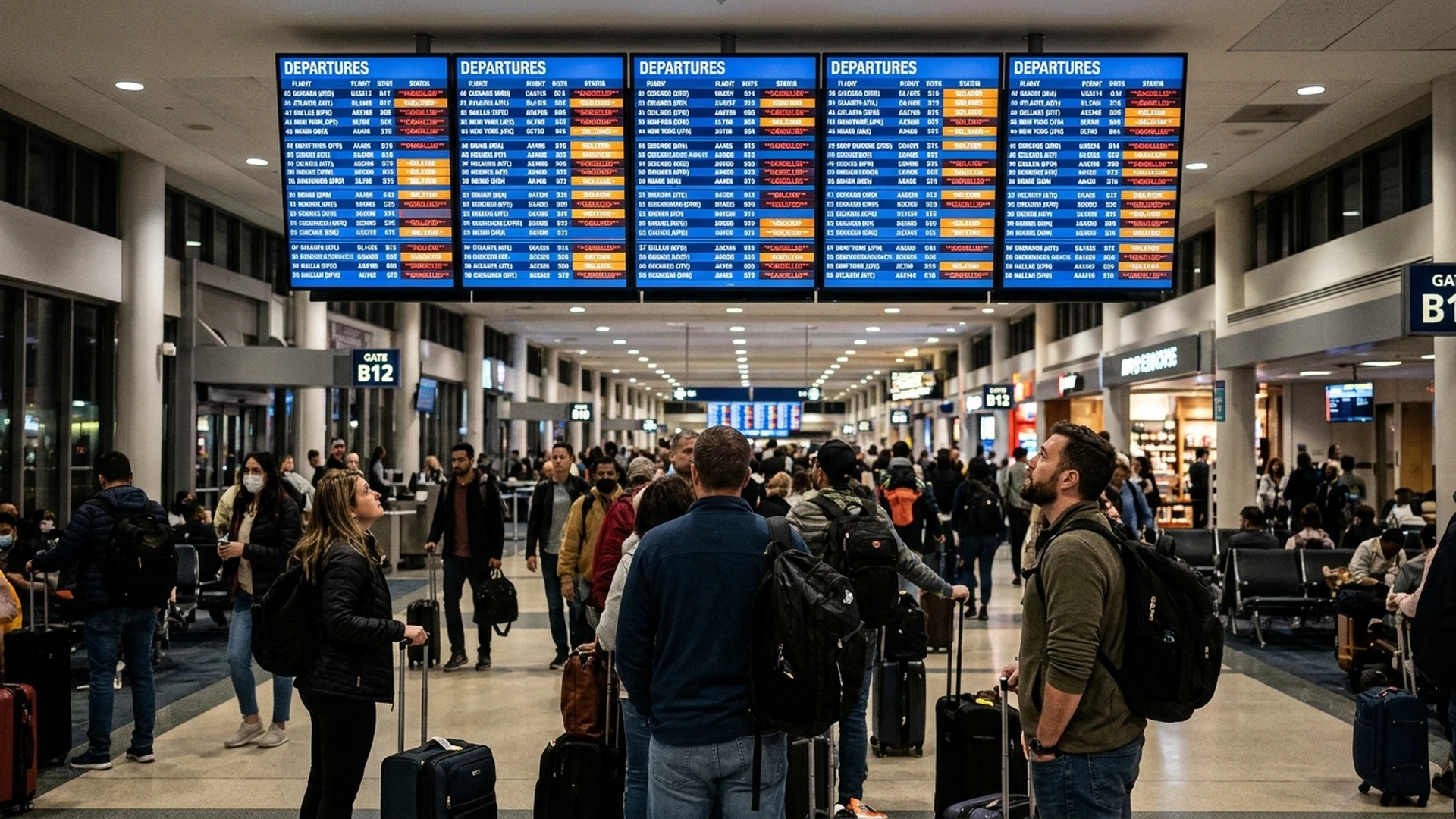
Although the ground stop was lifted at 8:15 PM EST after engineers bypassed the faulty routers and restored telecommunication telemetry, the four-hour freeze triggered an operational hangover that will disrupt domestic aviation through the weekend. Flight-tracking services logged more than 10,000 delayed flights and over 1,400 outright cancellations by midnight on Friday, with United Airlines, American Airlines, Delta Air Lines, and Southwest Airlines bearing the brunt of the schedule collapse.
The primary hurdle facing airline operations is crew legal duty hours and aircraft repositioning. Federal aviation regulations strictly limit the consecutive hours flight pilots and cabin attendants can remain on duty. With thousands of crew members stranded on taxiways or sitting in departure lounges during the four-hour freeze, hundreds of flight crews “timed out” legally, leaving airlines with aircraft ready to depart but without certified crews to fly them. The operational gridlock mirrors the severe cascading delays documented in our recent coverage of the Microsoft cloud disruption flight advisory, where back-office administrative freezes crippled airport departure boards.
Major carriers have issued nationwide travel waivers, allowing passengers scheduled to travel through Sunday to change flight itineraries without paying fare differences or change penalties. Ground operations teams at hubs like Chicago O’Hare and Dallas-Fort Worth are working around the clock to clear gate congestion, tow parked aircraft to maintenance ramps, and clear baggage handling logjams.
Zero Cyberattack Evidence: Homeland Security Confirms Internal Hardware Failure
Given the unprecedented scope of the nationwide departure freeze, speculation immediately circulated online suggesting that hostile state-sponsored cyber warfare or ransomware had penetrated federal aviation systems. Federal leadership moved quickly to dispel these rumors.
Transportation Secretary Sean Duffy held a press briefing late Friday, explicitly confirming that the failure was caused by internal network hardware failure rather than a digital security intrusion. “The FAA experienced an internal telecommunications switch and router overload that produced inconsistent data feeds to our air traffic control screens,” Duffy explained. “Out of an abundance of caution, we grounded departures until data integrity was verified. There is no evidence whatsoever of a cyber incident.”
Department of Homeland Security Secretary Markwayne Mullin echoed this assessment, stating that the Cybersecurity and Infrastructure Security Agency (CISA) conducted immediate forensic sweeps across FAA network perimeters and found zero indicators of compromise. While federal agencies regularly face sophisticated threat vectors, as analyzed in our review of the CERT-In high-severity infrastructure advisory, the FAA incident stemmed entirely from network architecture fragility under high telemetry load.
PFD Context: Why America’s 1980s Aviation Backbone Keeps Cracking
Friday’s nationwide ground stop serves as an urgent wake-up call regarding the fragility of national critical infrastructure. This incident marks only the second nationwide flight grounding since September 11, 2001, following the January 2023 Notice to Air Missions (NOTAM) database corruption that similarly paralyzed American skies. The recurring pattern is unmistakable: critical federal transport systems are buckling not under enemy assault, but under their own internal technical debt.
This aviation crisis also arrives during a week of extraordinary enterprise vulnerability across the tech landscape. Just 24 hours prior, corporate America was thrown into turmoil by the Workday enterprise cloud outage, which locked millions of retail and healthcare workers out of payroll and medical records due to failed cloud backup testing. The common thread linking both disasters is an organizational unwillingness to retire brittle legacy infrastructure before building high-bandwidth automated services on top of it.
Congress has authorized tens of billions of dollars over the past decade for FAA modernization, yet controllers across dozens of facilities still interact with hardware architectures designed in the late 20th century. Until federal agencies prioritize comprehensive hardware replacement over superficial software patches, passengers will remain at the mercy of aging routers that can bring an entire nation’s skies to a standstill with a single dropped packet queue.