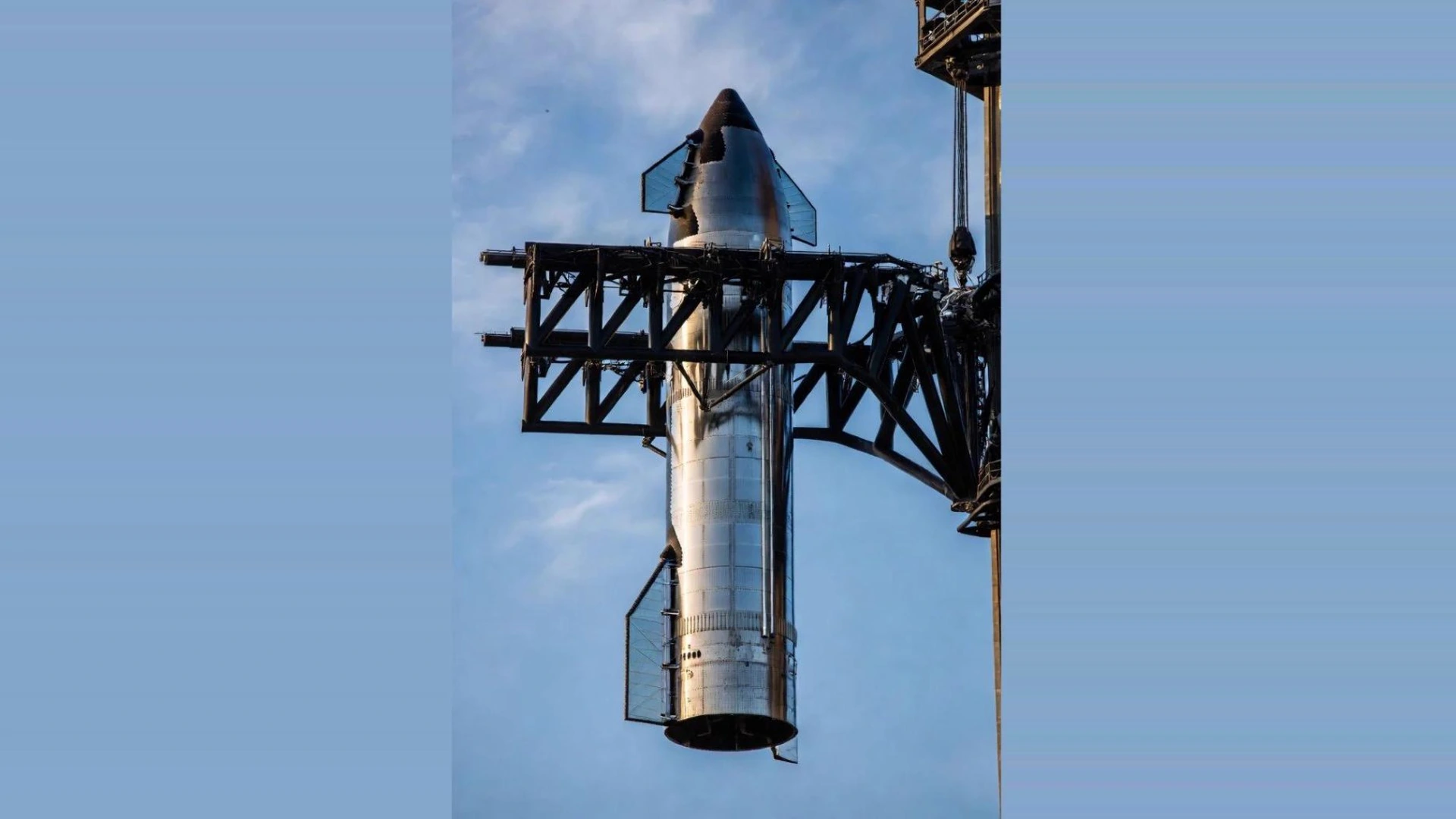
The latest SpaceX Starship launch has achieved a historic milestone in aerospace engineering after ground crews successfully caught the Starship upper-stage spacecraft using the mechanical “chopstick” arms of the Mechazilla launch tower at Starbase, Texas, on November 14, 2026. Conducted under Integrated Flight Test 15 (IFT-15), the mission marks the first time in human spaceflight history that an orbital-class spacecraft returning from Earth orbit has been caught mid-air by ground-based launch infrastructure.
Key Highlights of SpaceX Starship IFT-15
- First Orbital Starship Tower Catch: Upper-stage spacecraft Ship 42 successfully completed 14 Earth orbits before descending back to Starbase, reigniting its Raptor engines, and locking into the Mechazilla launch tower arms.
- 14-Orbit Endurance Demonstration: Ship 42 spent approximately 22.5 hours in low Earth orbit, stress-testing its thermal protection system, cryogenic propellant retention, and communication links.
- 26 Starlink V3 Satellites Deployed: The spacecraft achieved full payload objectives, deploying 26 next-generation Starlink V3 satellites while in orbit.
- Super Heavy Booster 22 Destroyed: A planned “double catch” was aborted when Booster 22 suffered an early boostback shutdown due to low propellant alarms, triggering an offshore abort and flight termination activation in the Gulf of Mexico.
- Major Reusability Leap: Capturing the upper stage without heavy deployable landing legs eliminates dead structural weight, moving SpaceX closer to fully reusable orbital spaceflight.
SpaceX Starship IFT-15: Complete Mission Specifications and Telemetry Matrix
| Mission Dimension | Verified Flight Telemetry / Technical Details |
|---|---|
| Mission Designation | Integrated Flight Test 15 (IFT-15) |
| Vehicle Architecture | Starship Block 3 Configuration |
| Launch Date & Site | November 13, 2026 from Starbase Orbital Launch Pad 2, Boca Chica, Texas |
| Upper-Stage Spacecraft | Starship Ship 42 (Nicknamed “Don’t Panic”) |
| First-Stage Booster | Super Heavy Booster 22 (B22) |
| Orbital Duration & Distance | 14 complete Earth orbits (approximately 22.5 hours in space) |
| Primary Payload | 26 next-generation Starlink V3 high-throughput broadband satellites |
| Upper-Stage Recovery Outcome | Successful mid-air catch by Mechazilla launch tower arms (November 14, 2026) |
| First-Stage Recovery Outcome | Aborted due to low propellant mass warning; destroyed by Flight Termination System (FTS) |
| Historical Significance | World’s first ground-tower capture of an orbital-class spacecraft upper stage |
Launch and Orbital Deployment: Ship 42 Completes 14 Earth Revolutions
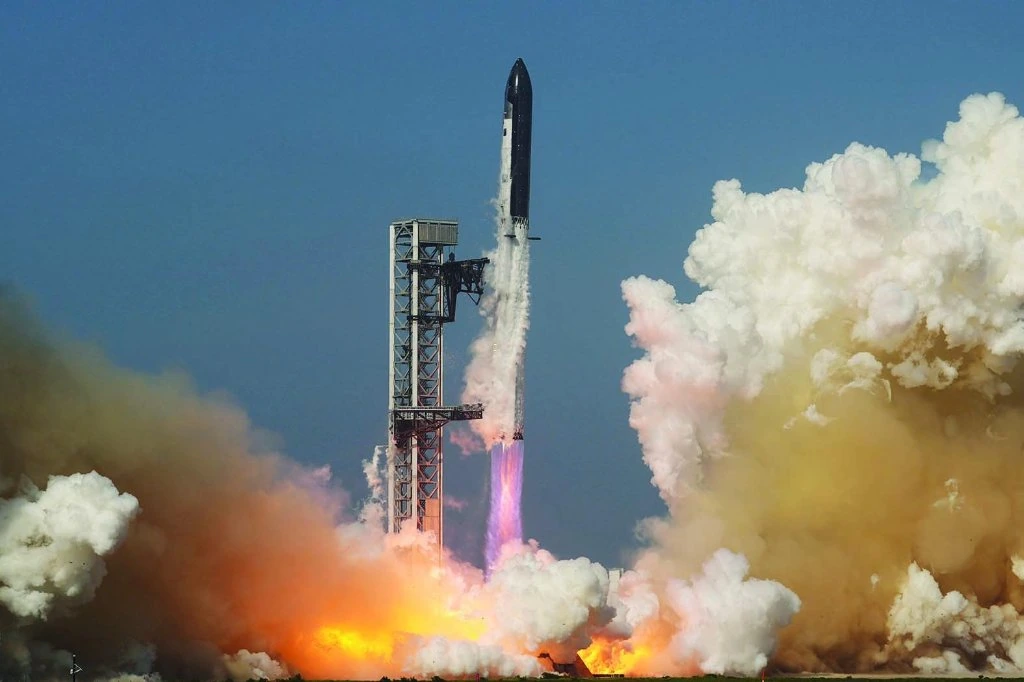
The milestone SpaceX Starship rocket launch commenced on the morning of November 13, 2026, when the 33 Raptor engines of Super Heavy Booster 22 ignited at Starbase, propelling the 121-meter stack through the lower atmosphere. Following a clean hot-staging separation at altitude, Ship 42 engaged its six vacuum and sea-level Raptor engines to enter an operational low Earth orbit.

Over the course of its 22.5-hour orbital journey, Ship 42 successfully achieved its commercial objective: opening its internal payload bay door to deploy 26 Starlink V3 satellites. The deployment directly expands global space-based broadband throughput, supporting direct-to-cell ground connectivity alongside commercial spectrum initiatives such as satellite broadband licensing frameworks for Starlink and OneWeb.
Super Heavy Booster 22 Recovery Aborted Over the Gulf of Mexico
While the upper stage executed its orbital schedule, the primary setback of IFT-15 occurred during the first-stage return sequence. SpaceX had intended to achieve a historic “double catch” by recovering Booster 22 at the launch tower minutes after liftoff, replicating the booster-catch capability first demonstrated in earlier flight tests.
However, during the booster’s boostback burn toward Starbase, internal telemetry triggered a low-fuel-mass alarm. When the automated Guidance, Navigation, and Control (GNC) algorithms determined that the booster lacked the precise propellant reserves and vector positioning required for a safe tower interface, the flight software triggered an autonomous abort.

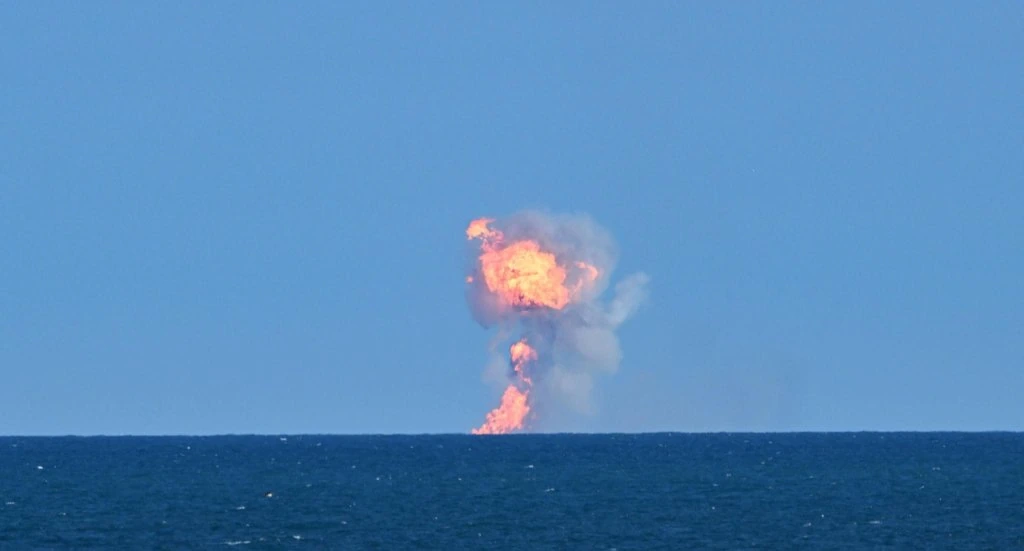
In accordance with range safety protocols established alongside federal regulators, Booster 22 diverted away from coastal infrastructure toward an offshore contingency landing zone in the Gulf of Mexico. Seconds before water impact, the automated Flight Termination System (FTS) activated, destroying the vehicle and eliminating potential risks to maritime channels or ground facilities.
Mechazilla Catches Ship 42: How the Tower Arm Capture Succeeded
On November 14, following its 14th orbital revolution, Ship 42 oriented its heatshield tiles into the upper atmosphere to begin hypersonic reentry. Enduring plasma temperatures exceeding 1,400 degrees Celsius, the spacecraft navigated down to terminal velocities using its four actuated aerodynamic flaps.
Approaching the Starbase launch facility, Ship 42 executed its signature flip-to-vertical maneuver, reigniting its sea-level Raptor engines to decelerate against gravity. Moving within meters of the Orbital Launch Integration Tower (OLIT), the spacecraft settled precisely between the massive steel “chopstick” mechanical arms, which closed inward to clamp beneath the ship’s reinforced forward lifting pins.

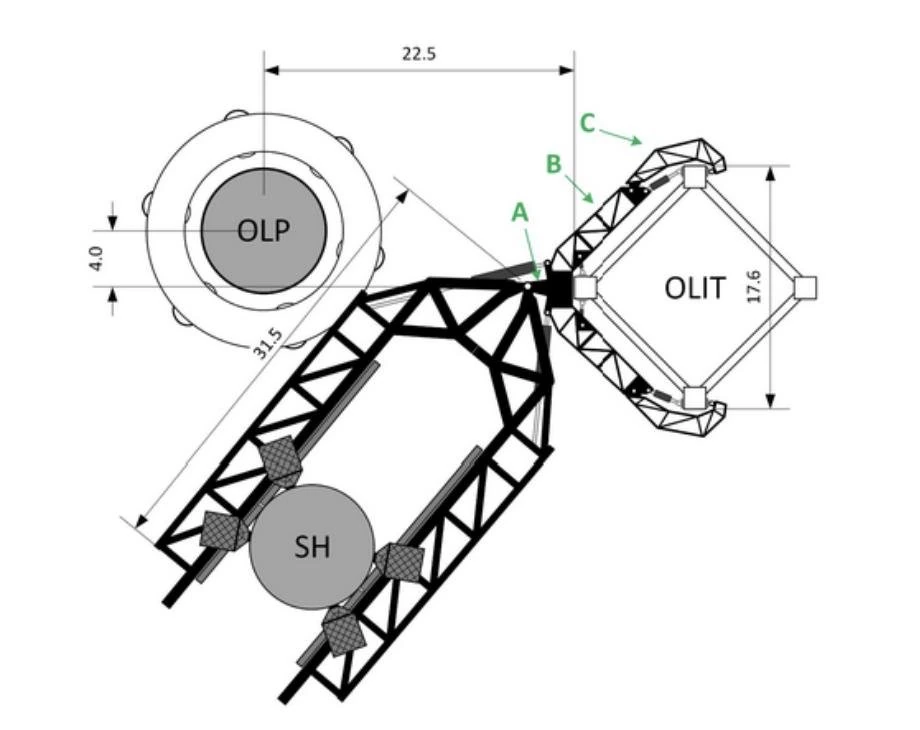
Securing an orbital upper stage directly out of flight marks a fundamental technical triumph. Traditional spacecraft require heavy landing legs, crushable shock absorbers, and extensive ground support equipment that add parasitic weight. By catching the vehicle with tower-mounted actuators, SpaceX saves thousands of kilograms in structural mass, converting that margin directly into orbital payload capacity.
Aerospace Safety Protocols and Airspace Coordination
Executing an orbital catch requires unprecedented coordination across commercial airspace. Because orbital reentry occurs at Mach 25 before decelerating over inhabited regions, mission controllers must operate under stringent safety boundaries. Similar automated failover systems and navigation safeguards recently proved essential during domestic aviation disruptions, such as the FAA nationwide flight ground stop caused by regional router overloads.
Furthermore, the precision manufacturing required to build cryogenic titanium propellant manifolds and robotic catch mechanisms highlights the critical role of domestic industrial engineering, a priority emphasized in recent strategic manufacturing policies such as national initiatives to build indigenous precision machinery, and corporate enterprise automation like the redundant backup architectures that failed during the Microsoft 365 global cloud failure.
PFD Context: Path to Rapid, Complete Rocket Reusability
Integrated Flight Test 15 delivers definitive proof of concept for the most technically daring aspect of the Starship architecture. While the loss of Booster 22 demonstrates that first-stage recovery remains sensitive to tight propellant margins, successfully catching an orbital spacecraft eliminates the single largest uncertainty facing SpaceX’s lunar and Martian transport ambitions.
For decades, aerospace engineers regarded orbital upper-stage reusability as nearly impossible due to extreme reentry heat and terminal landing velocities. By proving that a 50-meter spacecraft can complete 14 orbits, reenter through atmospheric friction, and be caught in mid-air by robotic arms, SpaceX has transformed orbital rocketry from an expendable operation into a reusable transportation network. Once the double catch is mastered in upcoming flight tests, the cost of lifting commercial payloads into deep space will drop to historic lows.