For over a decade, OnePlus stood as the undisputed darling of the Android enthusiast community. From the legendary cyanogen-powered OnePlus One to the bezel-less perfection of the OnePlus 7 Pro, the brand proved that consumers didn’t need to spend $1,000 to experience uncompromising speed and premium hardware.
However, the “Never Settle” journey is officially coming to an end across global markets.
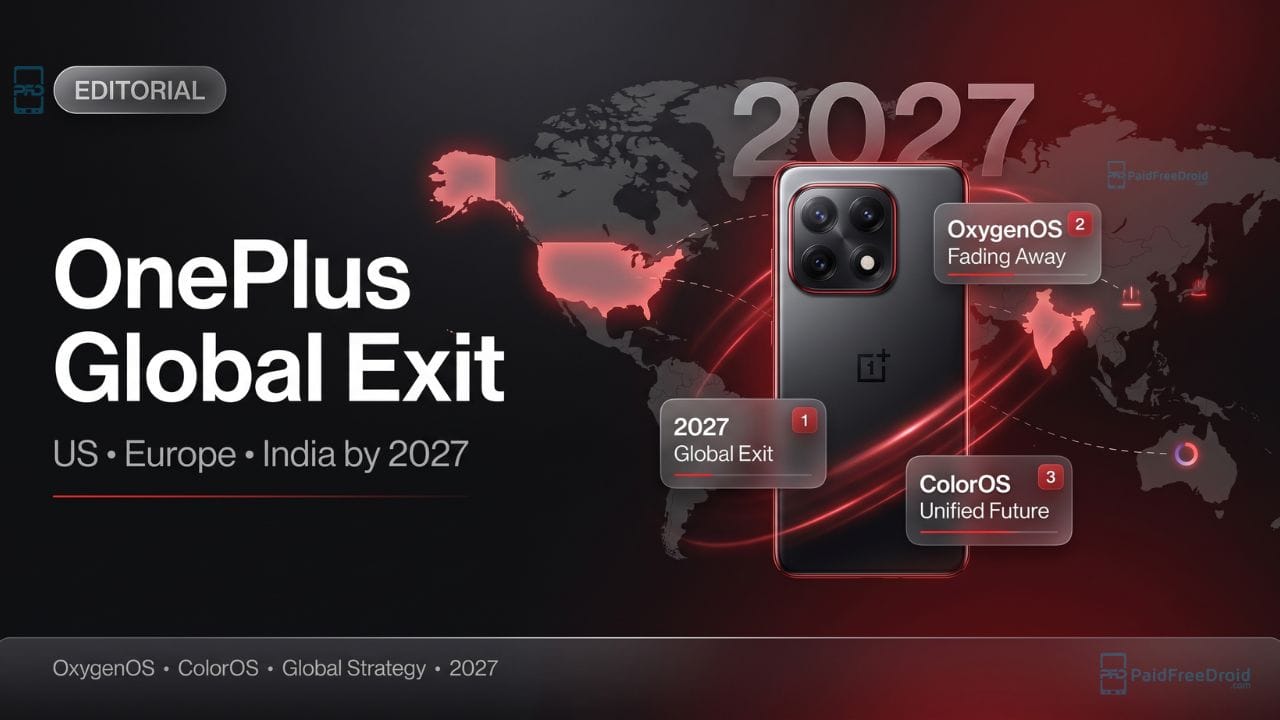
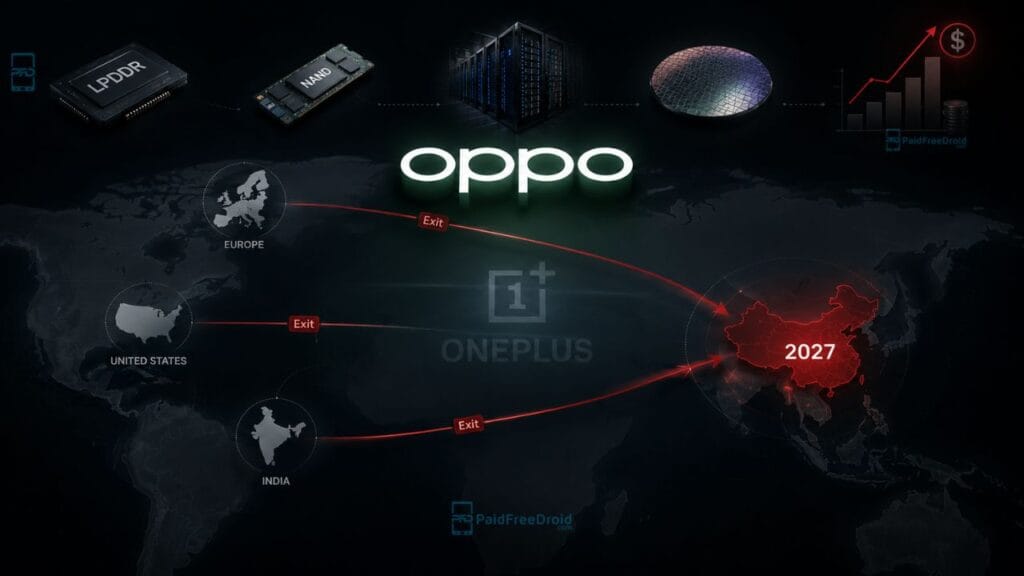
According to a bombshell report from Bloomberg’s Mark Gurman and Chris Welch, OnePlus will begin shutting down operations in the US and Europe as early as this week. Worse yet for its largest and most passionate fanbase, the retreat will expand globally, with OnePlus completely exiting India and all other non-Chinese markets by 2027. Within the next eighteen months, OnePlus will be reduced to a strictly domestic, China-exclusive brand.
How did one of the most influential smartphone manufacturers fall so far, and what does this mean for the future of the Android ecosystem? Here is the complete PFD industry analysis.
Why is Oppo Pulling the Plug? Brutal Economics

While fans are shocked by the sudden nature of this retreat, parent company Oppo is executing a top-to-bottom global restructuring driven by severe financial headwinds and supply chain crises.
- AI Memory Crisis: The core “high specs at low prices” proposition that defined OnePlus has become structurally uneconomic. Surging demand for enterprise data centers and artificial intelligence chips has triggered a global memory crisis, driving LPDDR RAM and NAND storage prices up by nearly 250% over the past year. Because cheap components no longer exist, high-volume budget drivers like the OnePlus Nord series saw their profit margins completely evaporate.
- Oppo’s Brand Consolidation: To survive the component crunch, Oppo is consolidating its empire. While OnePlus is being pulled back exclusively to China, sibling brand Realme is doing the exact opposite – exiting the Chinese domestic market entirely to focus its resources on Northern Europe and the Nordic region, where it currently holds better sales momentum.
- Legal & Geopolitical Headwinds: In Western markets, OnePlus has faced mounting geopolitical scrutiny and an ongoing trade-secret lawsuit from Apple. Compounding these struggles, the flagship OnePlus 15 🏆 suffered a rocky, heavily delayed US introduction due to a 43-day government shutdown that held up critical regulatory certifications. Trailing far behind Apple, Samsung, and even Motorola, staying in the US simply stopped making business sense.
Chaos at HQ: Why Roadmaps Are Vapor evaporating
For tech observers in India, the 2027 exit date feels jarring. Reports had consistently suggested that while 2026 would be a quiet, iterative year for the brand, regional teams had several highly innovative products mapped out for India in 2027.
However, recent corporate behavior proves that regional roadmaps are entirely at the mercy of HQ’s financial panic. Over the past year, OnePlus leadership has displayed unprecedented strategic whiplash:
- Compact Flagship Flip-Flop: The highly anticipated OnePlus 15s – a compact flagship designed to rival base models from Apple and Samsung – was initially green-lit, abruptly cancelled, un-cancelled, and then killed off again.
- Tablet Pull-Back: The OnePlus Pad Mini was fully developed and confirmed for the Indian retail market, only to be scrapped at the absolute last second before launch.
When a brand begins double and triple-guessing its own release schedules, it is a textbook indicator of internal consolidation. Even if Indian product managers had exciting hardware planned for 2027, Oppo’s executive board has decided that funding international marketing, distribution channels, and localized software teams is no longer viable.
Legacy: How OnePlus Changed Android Forever
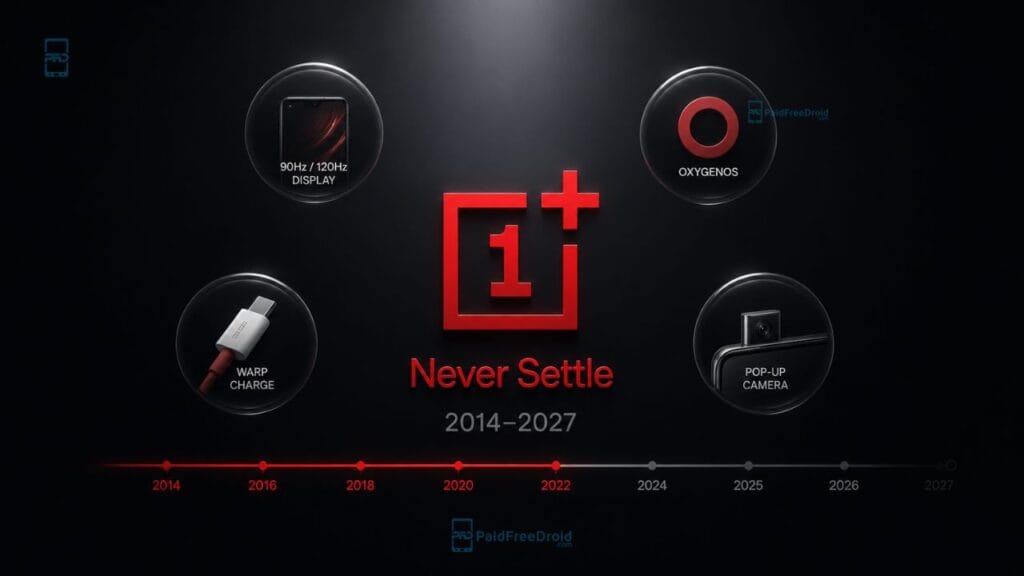
As OnePlus prepares to dismantle its global footprint, the tech industry owes a massive debt to the innovations it championed. The modern smartphone landscape would look fundamentally different today without their aggressive push for user experience:
| OnePlus Innovation | How It Changed the Industry |
| High-Refresh-Rate Displays | When 60Hz was the industry standard, OnePlus forced the entire market to adapt by making fluid 90Hz and 120Hz AMOLED panels the baseline for fluid scrolling. |
| Peak OxygenOS | They proved that Android skins didn’t need to be bloated or sluggish. Early OxygenOS was the gold standard for clean aesthetics, speed, and meaningful customization. |
| Warp / SuperVOOC Charging | While mainstream giants were bundling 5W and 15W bricks, OnePlus popularized ultra-fast proprietary charging, eliminating overnight charging anxiety forever. |
| Unbroken Display | The OnePlus 7 Pro remains a design masterpiece. By utilizing a mechanical pop-up selfie camera, they gave users a truly edge-to-edge, cutout-free display that few brands have dared to replicate since. |
PFD Verdict: What Should Current Owners Do?
If you are currently holding a OnePlus 13, OnePlus 15, or a Nord device, there is no immediate need to panic. The brand has reiterated that existing devices will continue to receive after-sales hardware support, warranty coverage, and scheduled software security updates.
However, from a buying perspective, the writing is officially on the wall. If you are shopping for a new smartphone in late 2026 or looking ahead to 2027, investing in a brand that is actively shutting down its international distribution channels carries inherent ecosystem risks.
The “Flagship Killer” proved that enthusiasts could band together to demand better hardware at fairer prices. Today, as we watch the consolidation of the global market into an Apple and Samsung duopoly, the void left by OnePlus will be felt for years to come.
Tags: OnePlus global shutdown, OnePlus exit India 2027, OnePlus leaving US Europe, Oppo restructuring, smartphone memory crisis, tech news 2026