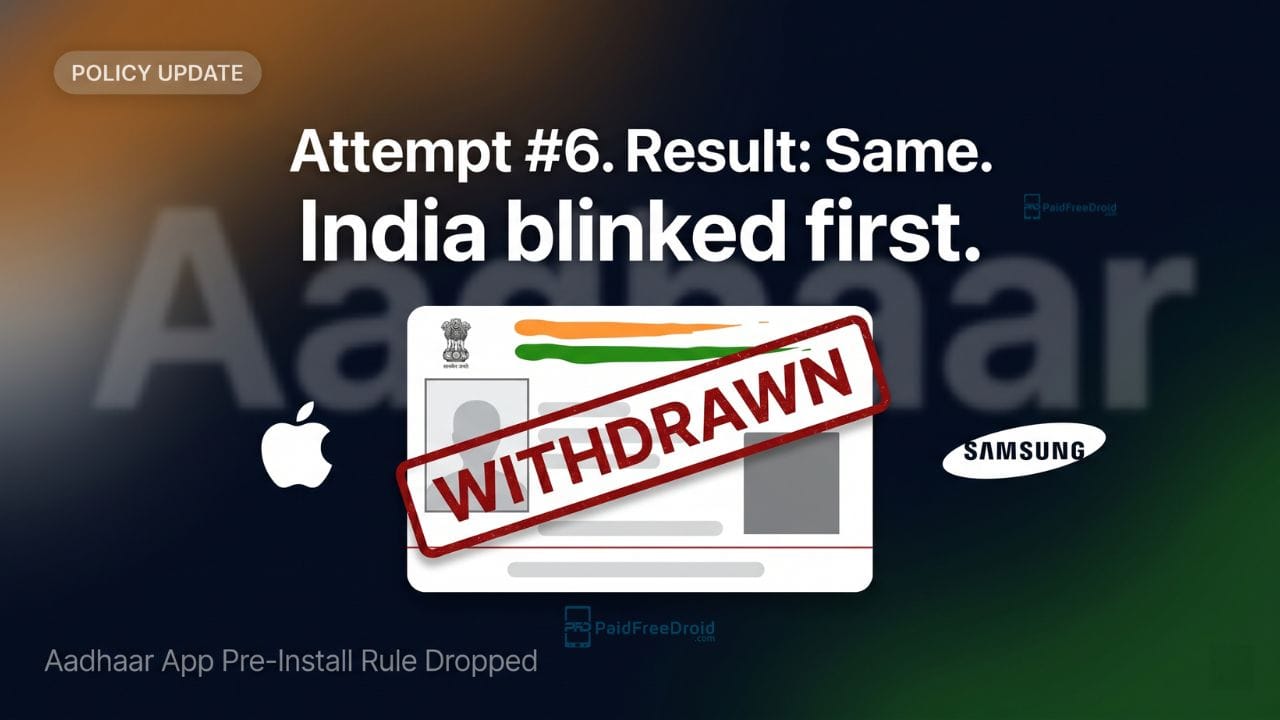
The Indian government officially abandoned its controversial proposal to force Apple, Samsung, and other smartphone makers to pre-install the Aadhaar app on all new devices sold in the country. Following intense industry pushback regarding user security, data privacy, and skyrocketing production costs, the IT Ministry (MeitY) confirmed the policy rollback in mid-April 2026. This marks the sixth time in two years that the government tried – and failed – to force a mandatory state-owned app onto personal consumer hardware.
What the Government Announced
UIDAI and the IT Ministry confirmed on April 17, 2026, that they will not mandate the pre-installation of the Aadhaar mobile application on consumer smartphones. Initially proposed in January 2026, the mandate would have forced every brand selling phones in India to ship devices with the biometric ID app baked into the operating system out of the box. MeitY ultimately spiked the proposal following closed-door consultations with major electronics stakeholders who flatly refused the terms.
Why Apple and Samsung Pushed Back
Apple and Samsung categorically rejected the pre-install proposal due to severe data security vulnerabilities and the massive financial penalty of altering global supply chains. Baking a government biometric app directly into the core operating system raised immediate red flags regarding user surveillance and potential data leaks. Furthermore, manufacturers warned that enforcing this rule would force them to create entirely separate, India-exclusive manufacturing lines, drastically increasing the production cost of every single handset rolling off the assembly line.
The Track Record of State Bloatware
This Aadhaar proposal represents the sixth failed attempt by the Indian government to force state-owned apps onto consumer devices since 2024. In December 2025, the government issued a sudden order requiring brands to pre-install the “Sanchar Saathi” telecom tracking app, only to face immediate refusal from Apple and roll back the order within days. The government consistently frames these apps as security tools, but the hardware industry consistently recognizes them as privacy liabilities.
What This Means for Indian Buyers
The IT Ministry’s decision to drop the Aadhaar pre-install mandate prevents smartphone brands from passing increased India-specific manufacturing costs directly to the Indian consumer. If Apple and Samsung had been forced to split their global manufacturing lines to create custom OS variants just for India, the resulting production penalty would have immediately trickled down into higher retail prices during EMI sales and festive events. More importantly, this rollback preserves the basic consumer right to choose what software accesses a device linked directly to their personal bank accounts and UPI IDs.
The Indian government finally recognized the limits of its regulatory reach over personal hardware. Forcing biometric identity applications onto smartphones against the will of manufacturers is a guaranteed way to spike hardware prices and compromise user privacy. With this Aadhaar proposal dead, buyers can continue downloading the app voluntarily from the Play Store or App Store – exactly how software installation should work.
Tags: Aadhaar app pre-install mandate, India smartphone policy 2026, UIDAI Aadhaar app Apple Samsung, MeitY tech news, Sanchar Saathi mandate rollback, Indian smartphone manufacturing, data privacy India, tech news India